
Discover Hanička, one of the most fascinating Czechoslovak border fortifications, built to defend the republic against Nazi Germany, later used for German artillery experiments and secretly transformed into a Cold War bunker.
Why Is It Called Hanička? The Charming Name Behind a Czechoslovak Military Fortress
For Czech and Slovak speakers, Hanička is a familiar and rather affectionate female name.
Hana is the Czech equivalent of Hannah or Ann, while Hanička is its diminutive form, something like calling a little girl Annie or little Hannah.
It might therefore seem an unusual name for a heavily reinforced artillery fortress designed to defend Czechoslovakia against Nazi Germany.
But there is a fascinating historical explanation.
The fortress was named after the nearby settlement of Hanička in the Orlické Mountains, whose origins date back to the eighteenth century.
According to local historical accounts, the settlement was named in honour of Countess Johanna von Nostitz, associated with the aristocratic family that owned the Rokytnice estate.
Before the Second World War, the settlement was commonly known by its German name, Hannchen, itself an affectionate form of Johanna. Older Czech geographical descriptions also used the name Hankov.
When Czechoslovak military engineers selected the nearby ridge for a major artillery fortress in the 1930s, they adopted the existing local name.
And that is how one of Czechoslovakia’s most formidable pre-war military fortifications came to be known by a name that sounds more like little Annie than a military stronghold.
Today, Hanička is one of the historical destinations available through our Private Czechoslovak Border Fortifications Tour from Prague, alongside Stachelberg Fortress.
My team and I visited Hanička in both 2024 and 2025, exploring its military structures and remarkable underground history. We are now delighted to introduce this extraordinary destination to travellers interested in discovering Czechoslovakia’s history beyond Prague.
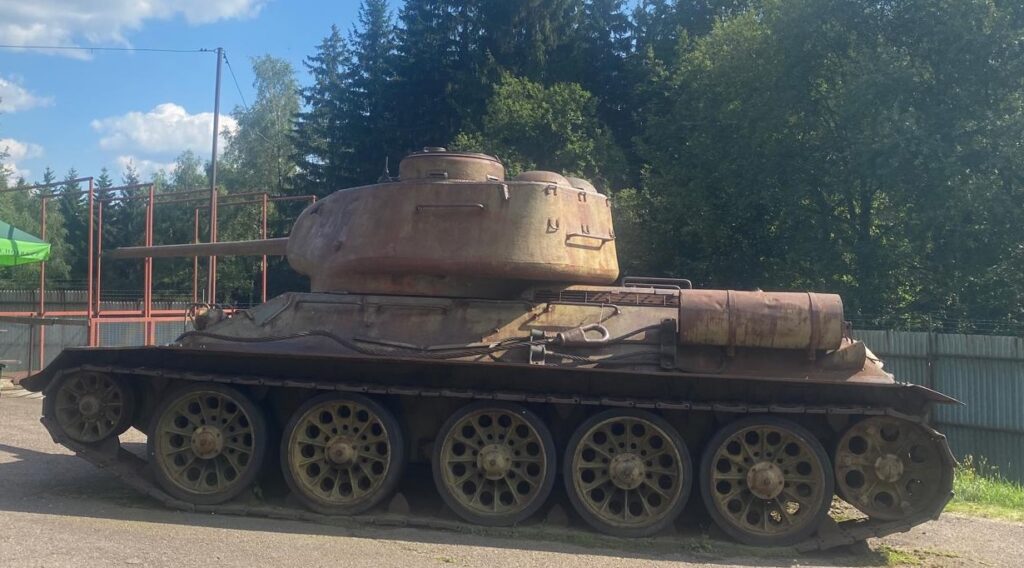
Hanička Fortress and Czechoslovakia’s Border Defence Plans Before World War II
Following the establishment of Czechoslovakia on 28 October 1918, the new republic developed a substantial army supported by a strong industrial and engineering sector.
However, its long borders presented considerable military challenges.
The situation became increasingly serious after Adolf Hitler came to power in Germany in January 1933.
German rearmament and territorial ambitions prompted Czechoslovakia to develop an extensive network of permanent border fortifications.
Construction began in 1935, influenced partly by French military engineering and the Maginot Line.
The original strategy was not to surround the country with an impenetrable concrete wall.
Instead, heavy artillery fortresses, reinforced infantry bunkers and smaller defensive structures were intended to delay invading forces, protect important roads and mountain passes, and provide time for the Czechoslovak army to mobilise.
Hanička was one of the artillery fortresses selected to strengthen the country’s northern frontier.
Located in the Orlické Mountains, near Rokytnice v Orlických horách, the fortress occupies a strategic position close to what is now the Czech-Polish border.
In 1938, however, this region bordered Nazi Germany and formed part of the wider Sudetenland border territories affected by Hitler’s demands.
The surrounding mountains provided natural defensive advantages, but roads and valleys offered possible invasion routes towards the Czech interior.
Hanička was designed to protect these approaches, support neighbouring fortifications and cooperate with the nearby Adam artillery fortress.
For a more detailed explanation of Czechoslovakia’s nationwide fortification programme and the events of September 1938, you can also explore our article about Stachelberg Fortress, the largest artillery fortress planned for the Czechoslovak border defence system.
Construction of Hanička Between 1936 and 1938: An Underground Military Stronghold
Construction of Hanička began in September 1936.
The work was undertaken by the Prague-based company of engineer Bedřich Hlava and supervised by the military engineering command in Rokytnice v Orlických horách.
The principal construction was completed in approximately 22 months, at a cost of around 28 million pre-war Czechoslovak crowns.
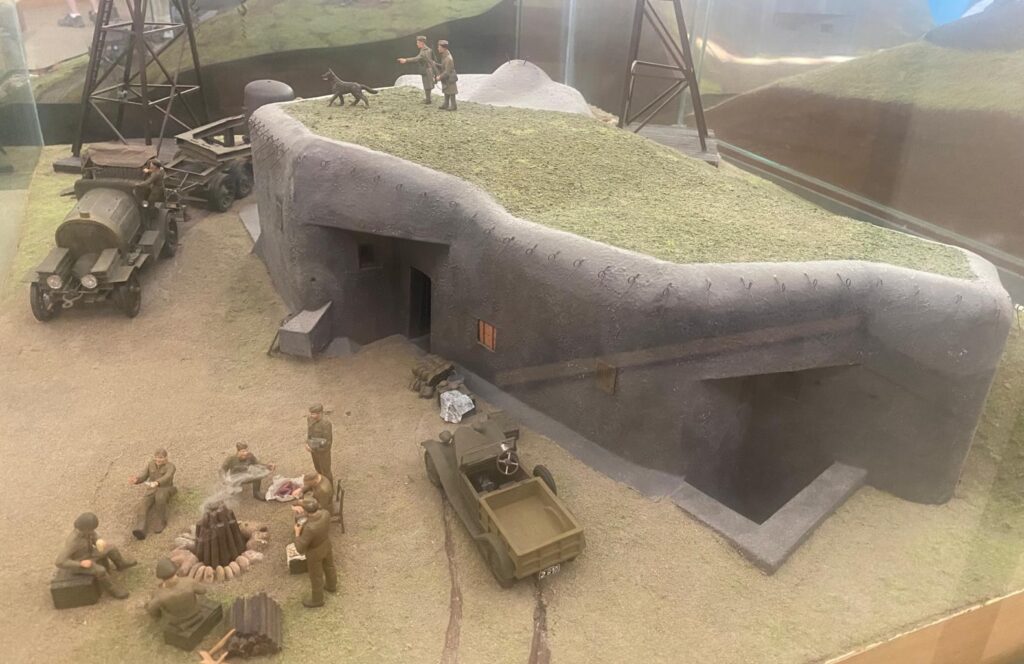
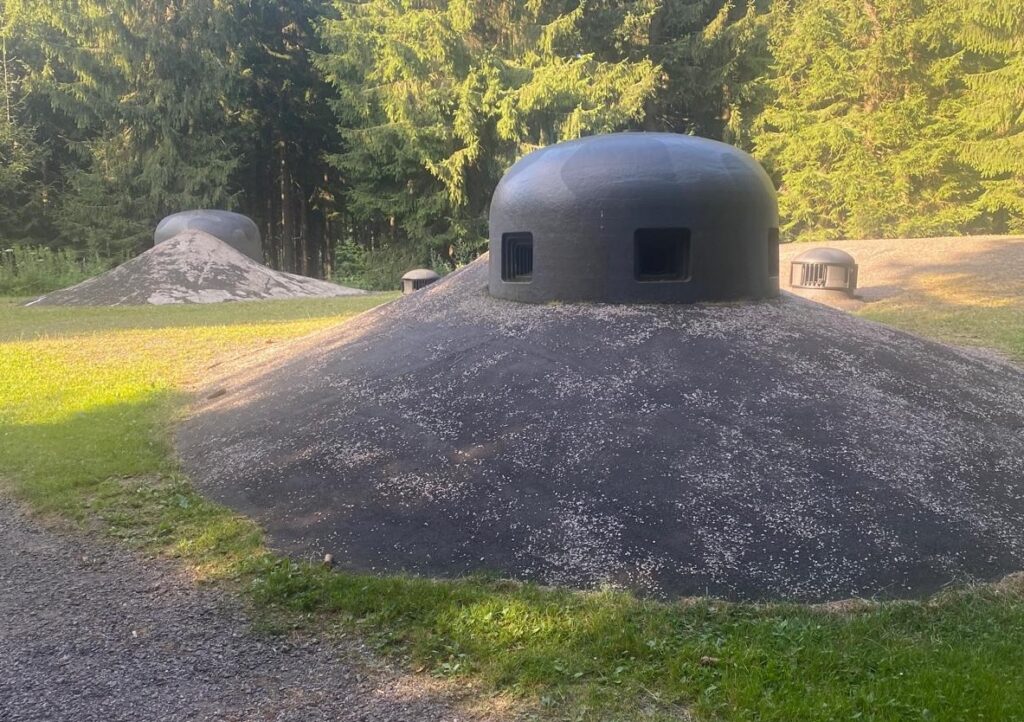
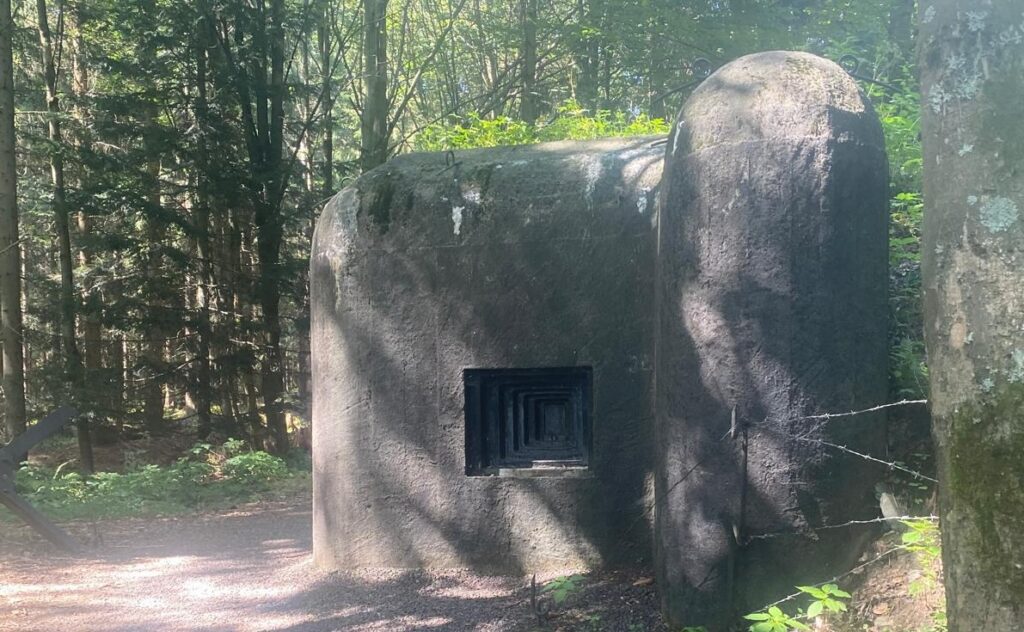
Hanička consisted of six reinforced-concrete surface structures connected by almost 1.5 kilometres of underground passages and chambers.
Three infantry blockhouses protected the immediate surroundings, while an artillery blockhouse was designed to accommodate three 100 mm howitzers.
A separate structure was intended to house a rotating and retractable artillery turret carrying two additional howitzers.
The sixth structure provided a protected entrance to the underground system.
Deep beneath the surface, the fortress contained passages, ammunition storage areas, technical facilities and chambers intended for the garrison.
The planned military complement numbered 426 soldiers, supported by an additional infantry company responsible for defending the surrounding obstacle system.
The designated commander was Major Jaroslav Mikuláš Novák, a former Czechoslovak Legionnaire who had participated in the Battle of Zborov.
Hanička was designed to remain operational even during a prolonged siege.
Its underground facilities would allow soldiers and supplies to move between the defensive structures while remaining protected from artillery fire.
The planned artillery turret was particularly impressive. It would have been capable of firing in any direction, reaching targets almost 12 kilometres away.
However, although the concrete construction was largely completed by 1938, the principal artillery weapons and important technical equipment had not yet been installed.
Hanička was structurally impressive, but not fully prepared for combat.

September 1938: General Mobilisation, the Munich Agreement and the Surrender of Hanička
On 23 September 1938, Czechoslovakia declared general military mobilisation.
More than one million military personnel were mobilised as the republic prepared for a possible German invasion.
Across the country, reservists reported for duty and defensive positions were occupied.
At Hanička, however, much of the intended military equipment was still missing.
The three 100 mm howitzers had not been installed, and the rotating artillery turret had not arrived.
As a result, most of the planned garrison remained in barracks, while smaller guard units maintained the fortress.
Only days later, the Munich Agreement of 29–30 September 1938 forced Czechoslovakia to surrender the Sudetenland to Nazi Germany.
Czechoslovak representatives had been excluded from the negotiations between Germany, Italy, Britain and France.
The agreement became known in Czech and Slovak historical memory as the Munich Betrayal.

Thousands of newly constructed fortifications, including strategically important artillery positions, were abandoned without the anticipated military confrontation.
On the morning of 10 October 1938, Hanička was handed over to representatives of the German Wehrmacht.
Before withdrawing, Czechoslovak soldiers removed equipment that could be transported into the remaining territory.
The fortress had been constructed to resist a German invasion. Instead, it passed into German hands without a battle.
Nazi Artillery Experiments at Hanička: Could German Weapons Destroy Czechoslovak Fortifications?
What happened to Hanička after the German takeover is one of the most interesting chapters of its history.
The Wehrmacht suddenly had access to hundreds of modern Czechoslovak reinforced-concrete bunkers.
German military engineers were eager to study their construction, strength and resistance to different weapons.
Rather than destroying every captured fortification, the German army selected certain structures for artillery and explosives testing.

Hanička became one of these experimental sites.
During 1940, German military units carried out firing trials against several surface structures, evaluating the quality of the reinforced concrete and experimenting with weapons designed to penetrate heavily protected military positions.
Röchling Projectiles and German Concrete-Penetrating Ammunition
Among the specialised weapons being developed in Germany were the unusual concrete-penetrating projectiles produced by the Röchling company.
These elongated steel projectiles were designed to penetrate thick reinforced concrete using the energy of their impact.
German military experiments involving specialised ammunition were conducted at several captured Czechoslovak fortresses, including Hanička and Hůrka near Králíky.
The tests demonstrated the considerable resistance of Czechoslovak military engineering.
Conventional artillery could struggle to penetrate the thickest reinforced-concrete walls, while specialised ammunition was capable of inflicting more serious damage.
However, the popular suggestion that German forces simply could not destroy the Czechoslovak bunkers is not entirely accurate.
The fortifications were exceptionally strong, but they were not indestructible.
Heavy artillery, carefully positioned explosive charges and purpose-built penetrating ammunition could cause substantial structural damage.
The experiments nevertheless revealed the quality of the original defensive construction and the considerable effort required to overcome it.
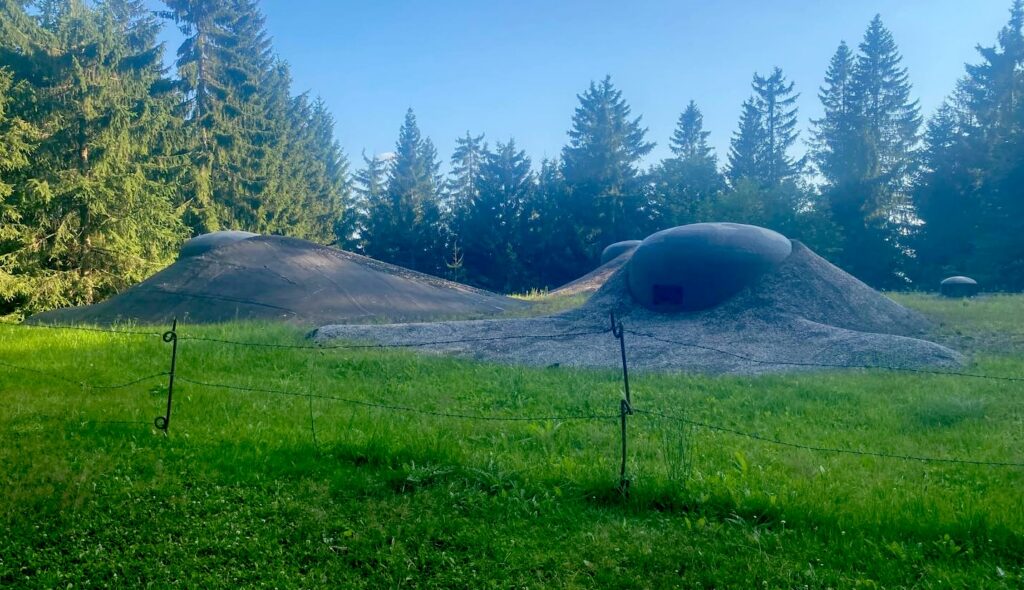
German Explosive Tests and Surviving Damage at Hanička
German military engineers also experimented with explosive charges against Hanička’s armoured defensive installations.
According to the fortress museum, an armoured observation cupola still bears traces of these experiments.
The surviving damage provides a fascinating physical reminder of the German army’s attempts to test the strength of captured Czechoslovak fortifications.
Hanička was never used in the defensive battle for which it had been constructed.
Instead, parts of the fortress became experimental targets for the very army it had been designed to resist.
Hanička After World War II: How Scrap Metal Recovery Caused Unexpected Destruction
Following the end of the Second World War, Hanička returned to Czechoslovak military control.
For several years, the fortress remained under military administration, while different proposals for its future use were considered.
One of the most destructive episodes occurred during the 1950s.
Between 1954 and 1958, the state enterprise Kovošrot removed valuable steel components from the fortress.
The enormous armoured observation cupolas contained substantial quantities of reusable metal.
Unfortunately, removing them from reinforced concrete was a difficult operation.
Explosives and heavy equipment were used to extract these steel structures, causing extensive damage to several blockhouses.
According to the fortress museum’s historical records, these postwar operations caused more damage to parts of Hanička than the German weapons experiments during the occupation.
It is a surprising detail: military structures that had resisted German artillery testing suffered serious destruction during peacetime industrial dismantling.
Despite this damage, the underground complex survived.
In 1969, Hanička opened to the public as a military history museum.
During the early years, visitors explored the underground passages with portable torches before more permanent lighting was introduced.
In 1972, the fortress was also used during filming of Dny zrady (Days of Betrayal), directed by Otakar Vávra, which portrayed the events surrounding the Munich Crisis.
However, Hanička’s first period as a public museum would soon come to an end.
Another extraordinary transformation was approaching.
Objekt Kahan: The Secret Cold War Government Bunker Hidden Beneath Hanička
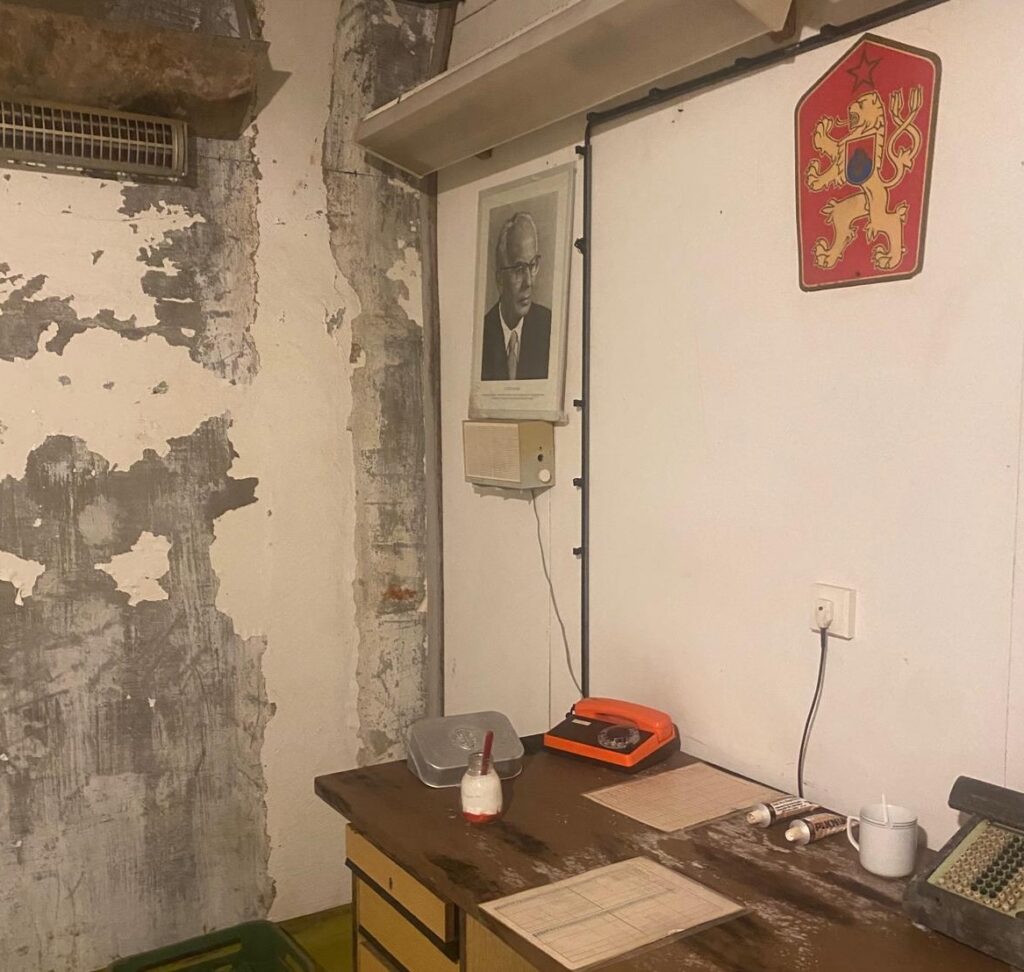
In 1975, Hanička was taken over by the Federal Ministry of the Interior of communist Czechoslovakia.
The fortress was closed to the public.
Nearly forty years after its original construction, the underground complex was selected for an entirely different purpose.
Under the codename Objekt Kahan, the authorities planned to convert Hanička into a protected wartime government facility.
During the Cold War, the threat of nuclear conflict between NATO and the Warsaw Pact influenced military planning throughout Europe.
Governments invested enormous resources in underground installations intended to protect important personnel and maintain essential communications during major emergencies.
Hanička’s deep passages, reinforced-concrete structures and remote mountain location made it a suitable candidate for such a project.
Major reconstruction work began in 1979.
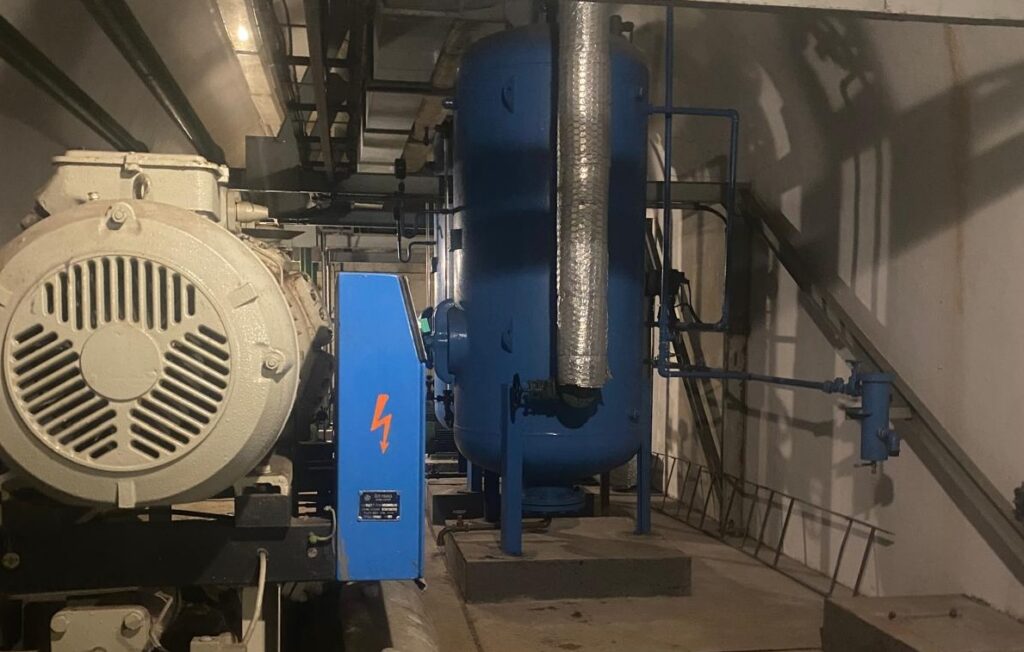
The original underground chambers were modified, and modern equipment was installed.
The conversion included ventilation and filtration systems, emergency electricity generation, water treatment facilities and communications infrastructure.
Some original surface structures were modified or covered with earth to improve their protection and isolation from the surrounding environment.
A new administrative and service building was constructed near the entrance, concealing the original access to the underground complex.
The aim was to establish a protected wartime workplace for the Federal Ministry of the Interior.
The project was ambitious and extremely expensive, consuming hundreds of millions of Czechoslovak crowns.
Yet it was never fully completed.
Following the political changes of November 1989 and the end of the Cold War, the facility gradually lost its intended purpose.
Construction finally stopped in 1993.
Today, these Cold War modifications make Hanička particularly unusual among Czechoslovakia’s surviving border fortifications.
Visitors can discover original military structures from the 1930s alongside equipment installed during the communist period.
A fortress originally constructed against Nazi Germany had been adapted into a protected government facility during the nuclear tensions of the Cold War.
Hanička Fortress Museum: Preserving the History of Two Different Military Eras
Following the abandonment of Objekt Kahan, the fortress eventually returned to civilian administration.
In 1995, the site became available for renewed public use, and the museum was subsequently developed under the administration of Rokytnice v Orlických horách.
In 2006, Hanička was declared a protected cultural monument.
Today, the museum preserves a fascinating combination of original Czechoslovak military architecture and Cold War technical equipment.
Visitors can explore reinforced-concrete structures, underground passages, technical installations and exhibitions explaining the fortress’s changing history.
Its survival provides an opportunity to understand two very different periods of European military planning.
The original fortress reflects Czechoslovakia’s preparations for a possible German invasion in the 1930s.
The later underground conversion reveals the security concerns of communist Czechoslovakia during the Cold War.
Few historical sites bring these contrasting periods together so directly.
Exploring Hanička Fortress: Our Team Visits in 2024 and 2025
At Operation Anthropoid Tours, visiting historical locations personally is an important part of how we develop our private excursions.
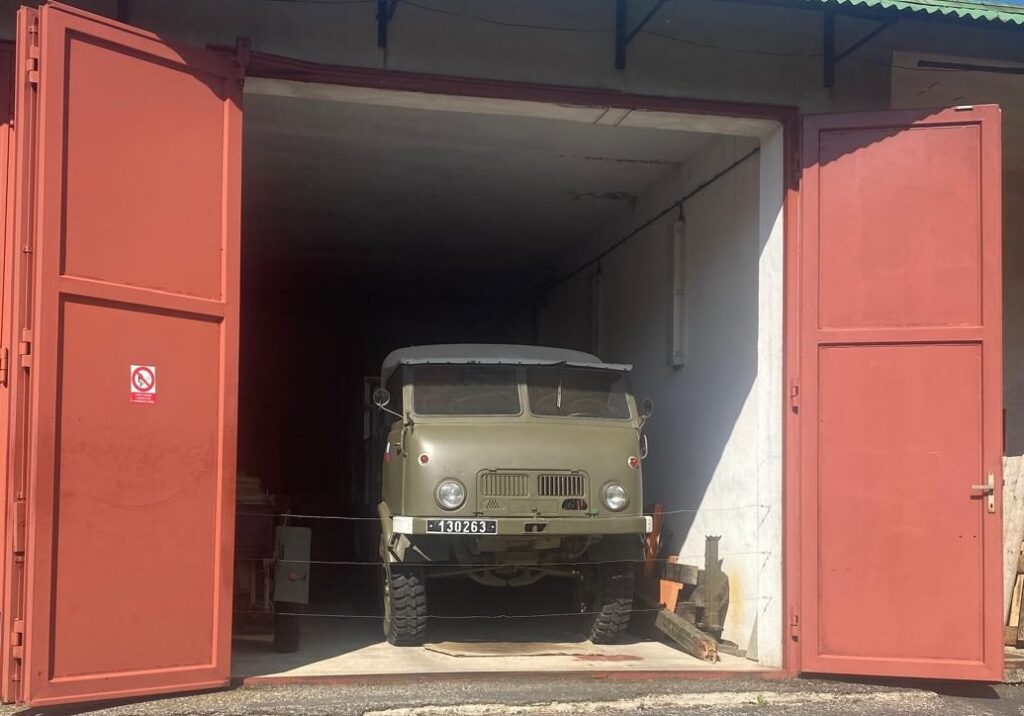
My team and I visited Hanička in 2024 and returned again in 2025.
As Prague-based licensed guides with a particular interest in Czechoslovak history, World War II and the resistance against Nazi occupation, we wanted to explore the site and become familiar with its history and surrounding landscape.
Hanička offers an especially interesting experience because its underground complex connects different historical periods within the same location.
The original military structures tell the story of Czechoslovakia’s preparations to defend its independence in the 1930s.
The German artillery experiments provide physical evidence of what happened to the country’s fortifications following the Munich Agreement.
And the Cold War installations reveal how the same underground fortress was adapted for an entirely different military and political purpose.
Our visits also helped us become familiar with the practical arrangements involved in organising excursions from Prague.
We are now pleased to offer Hanička as part of our private Czechoslovak Border Fortifications Tour, and we look forward to introducing travellers to this remarkable chapter of Czech and Czechoslovak history.
Visiting Hanička Fortress Today: Underground Tours, Opening Hours and Travel From Prague
Hanička is located in the Orlické Mountains, near Rokytnice v Orlických horách, approximately seven kilometres from the town.
It makes an excellent destination for military history enthusiasts wishing to explore the Czech countryside beyond Prague.
Travelling from Prague by private vehicle generally requires allowing approximately three hours each way, depending on traffic and the departure location.
The visit is therefore best planned as a full-day excursion.
Underground Guided Tours and Visitor Information
The museum offers organised guided visits through its underground passages and chambers.
The standard guided tour lasts approximately 60 minutes, while an extended version takes around 80 minutes.
Visitors can explore the original fortress construction and discover surviving equipment associated with the Cold War conversion.
An important practical detail is that vehicles cannot drive directly to the museum.
Visitors must leave their vehicles at the designated Panské Pole parking area and continue on foot.
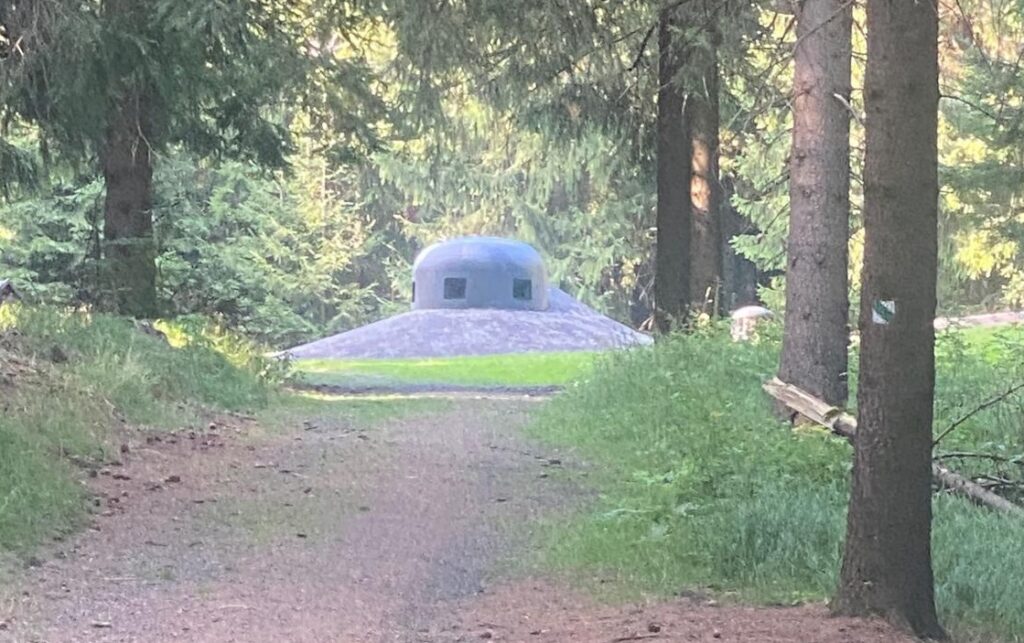
The marked forest path takes approximately 20–30 minutes each way, depending on weather conditions and individual walking speed.
The temperature underground remains around 5–8°C throughout the year, so warm clothing and suitable footwear are strongly recommended.
The route also includes stairs and underground passages, which may be unsuitable for some visitors with reduced mobility.
Seasonal Opening Hours
Hanička operates a seasonal visitor schedule.
Regular public visits are generally available between May and October, with the broadest opening arrangements during July and August.
Visits outside regular opening times may be possible by prior agreement, subject to the museum’s operational requirements and minimum group arrangements.
From 1 December until 31 March, the underground fortress is closed to visitors to protect hibernating bats.
Opening hours and guided tour arrangements should always be confirmed before travelling.
Official museum website: Hanička Fortress Museum
Visit Hanička or Stachelberg on Our Private Czechoslovak Border Fortifications Tour From Prague
At Operation Anthropoid Tours, we organise private historical excursions to some of the most remarkable surviving Czechoslovak border fortifications.
Travellers can choose between Hanička Artillery Fortress and Stachelberg Fortress, depending on their interests, preferred dates and museum availability.
Although both were constructed as part of the same pre-war defensive programme, their histories are quite different.
Stachelberg was intended to become the largest artillery fortress in the Czechoslovak defence system, but construction was interrupted following the Munich Agreement.
Hanička was structurally completed before September 1938, later became a site of German weapons experiments and was subsequently transformed into a secret Cold War government facility.
Both destinations offer a fascinating opportunity to explore the history of Czechoslovakia beyond Prague.
Our private excursions include return transportation from Prague, an English-speaking licensed guide and a guided visit to the selected fortress, subject to the museum’s seasonal arrangements.
The tour normally takes approximately 8–10 hours, including transportation and a countryside lunch break.
Our regular excursions operate between May and October, with prices individually calculated according to the destination and group size.
Discover Our Private Czechoslovak Border Fortifications Tour
From Hanička Fortress to Operation Anthropoid: Understanding Czechoslovakia’s Struggle for Independence
The history of Hanička is connected to the broader story of Czechoslovakia’s struggle to defend its independence.
The Munich Agreement of September 1938 was followed by the German occupation of the Czech lands in March 1939.
Czechoslovak soldiers and civilians who refused to accept the occupation continued their resistance both at home and abroad.
Among them were the Czechoslovak paratroopers Jozef Gabčík, a Slovak, and Jan Kubiš, a Czech, whose mission culminated in the attack on Reinhard Heydrich in Prague on 27 May 1942.
The pre-war border fortifications and the later resistance movement belong to different chapters of Czechoslovak history, but both reflect the determination to defend and ultimately restore the country’s independence.
Today, Hanička allows visitors to explore a remarkable military complex shaped by the events of 1938, the Nazi occupation and the Cold War.
From an artillery fortress designed to defend the First Czechoslovak Republic to a German weapons-testing site and later a protected government installation, its history reflects some of the most important political and military changes of twentieth-century Europe.
For anyone interested in Czechoslovak military history, Hanička is well worth the journey beyond Prague.