
Stories Behind the Walls: Milada Horáková, Eva Clarke and the Fight to Survive
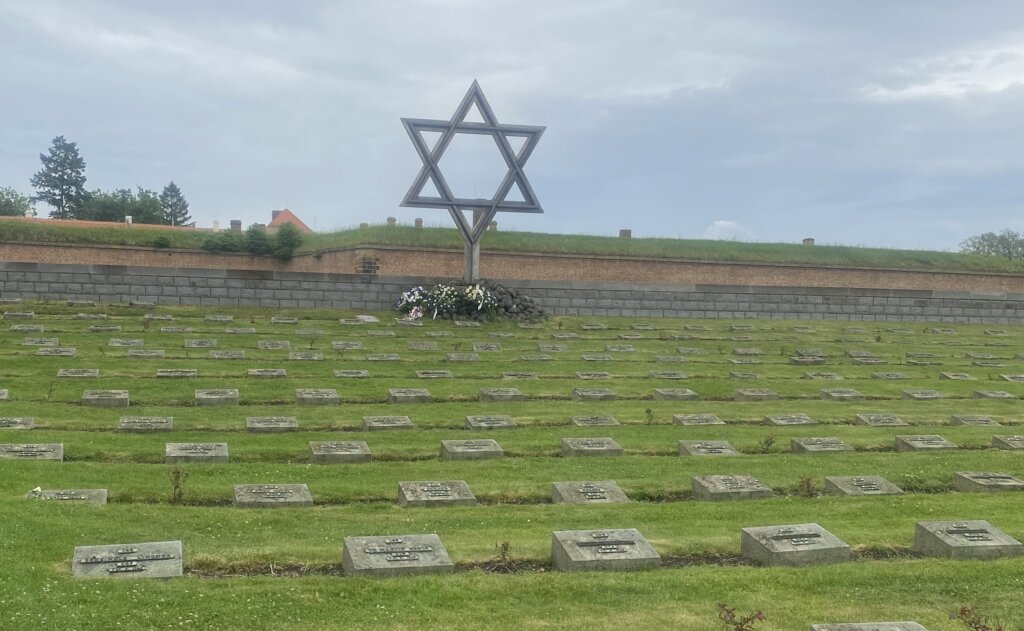
Terezín lies approximately an hour’s drive north of Prague, depending on traffic and your departure point. Behind its eighteenth-century fortifications are two distinct wartime histories: the Jewish ghetto inside the town and the separate Gestapo prison in the Small Fortress.
Commonly referred to as Terezín concentration camp, it was not an extermination centre with operating gas chambers. The Jewish ghetto served as a place of forced confinement and, for many prisoners, a transit point before deportation to other ghettos, forced-labour camps and killing centres, including Auschwitz-Birkenau and Treblinka.
Some prisoners remained in Terezín for months or years. Others were deported onwards much sooner. Tens of thousands died here from hunger, disease and appalling living conditions. Most of those sent onwards did not survive.
Understanding Terezín means looking beyond its buildings and the propaganda that concealed their purpose. It also means remembering individuals: children whose drawings survived, resistance members who attempted escape, Milada Horáková and the parents of Eva Clarke, who would later be born at Mauthausen shortly before liberation.
Before the occupation: why was Terezín built?
Terezín began as a military project of the Habsburg monarchy.
Emperor Joseph II founded the fortress in 1780, naming it in honour of his mother, Maria Theresa. Its German name, Theresienstadt, refers to the same place.
The fortress was built to defend an important northern approach towards Prague against Prussian military advances. Construction continued for approximately ten years, creating an extensive system of brick ramparts, bastions, moats and underground passages.
The Main Fortress contained the garrison town, with its barracks, administrative buildings and civilian homes. Across the Ohře River stood the Small Fortress, which formed another part of the defences and later served as a prison.
The Nazis took over this existing landscape. Buildings designed for military and civilian life became places of confinement and persecution.
The Jewish ghetto and the Small Fortress: what is the difference?
The Small Fortress became a Gestapo police prison in June 1940. Its prisoners included Czech resistance members, opponents of Nazi rule and people from other countries.
The Jewish ghetto was established in November 1941 inside the Main Fortress, meaning the town itself. It held Jews deported from the Czech lands and elsewhere in Europe.
These institutions had different administrations and prisoner populations. Their histories belong together when explaining Terezín, but they should not be confused.
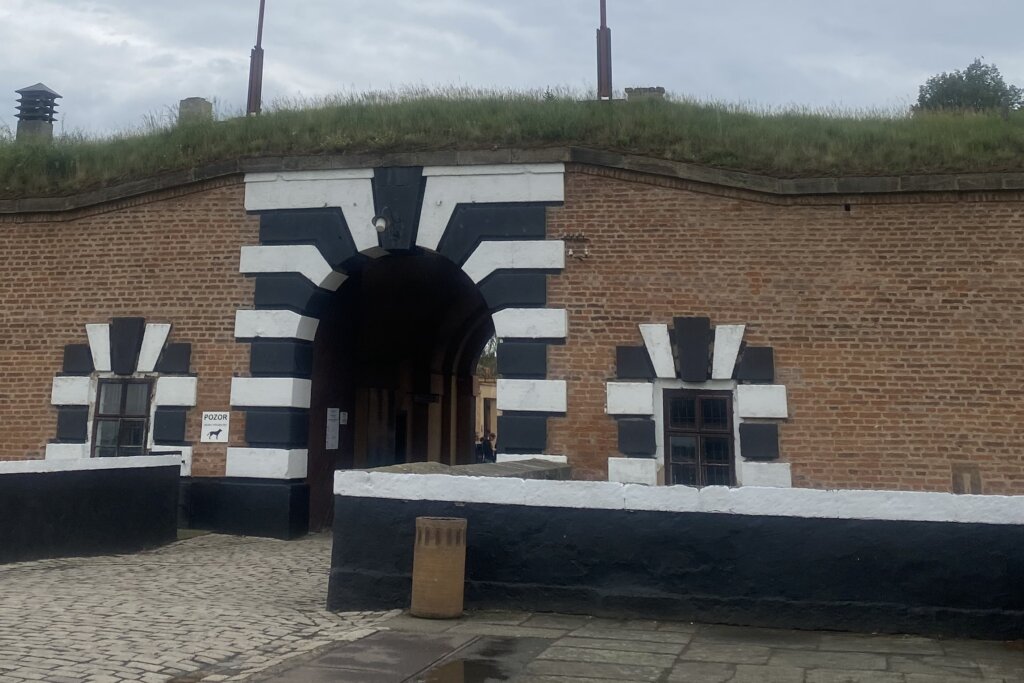
Visiting the Small Fortress alone therefore tells only part of the story. The streets, former barracks and surviving records of the Jewish ghetto reveal another essential chapter.
The Small Fortress: imprisonment under the Gestapo
Approximately 32,000 men and women passed through the Small Fortress during the Nazi occupation.
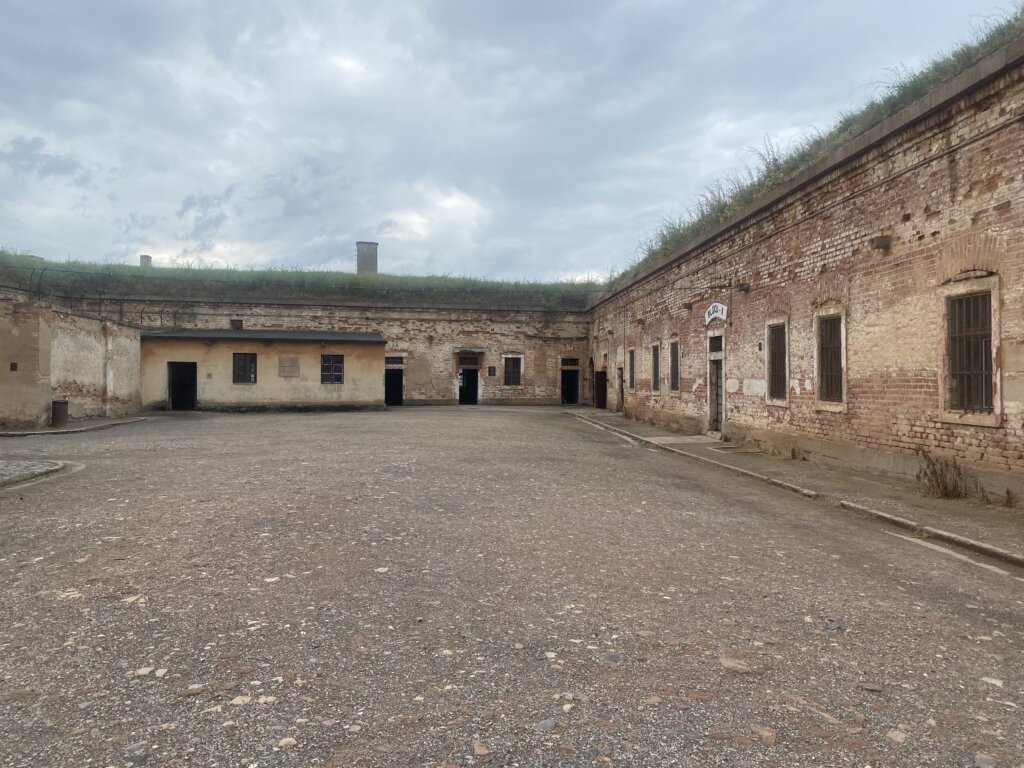
Prisoners endured overcrowding, inadequate food, poor sanitation, forced labour and physical abuse. Many were subsequently transferred to other prisons and concentration camps. Others died or were executed here.
The prison formed part of the machinery used to suppress resistance and intimidate the population of the Protectorate of Bohemia and Moravia.
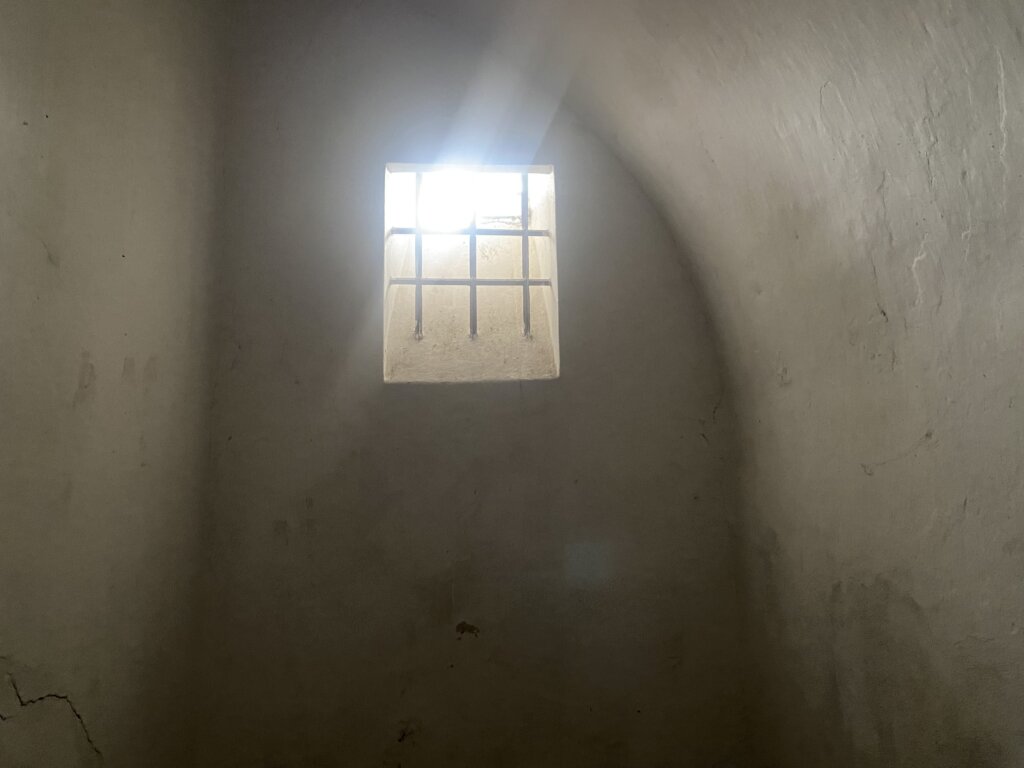
Today, its cells and courtyards make the physical conditions more immediate. Understanding who was imprisoned gives those spaces meaning. Behind every name was a life beyond the arrest: relatives, work, friendships and plans interrupted by persecution.
Milada Horáková: surviving Nazi imprisonment
Among those imprisoned in the Small Fortress was Milada Horáková, a lawyer, women’s rights campaigner and member of the anti-Nazi resistance.
Arrested in August 1940, she was held in Prague before being transferred to Terezín. The Terezín Memorial’s prisoner database records her imprisonment in the Small Fortress from 10 June 1942 to 21 June 1944.
During this period, she worked in the women’s infirmary, where she could assist fellow prisoners. She was subsequently transferred to Germany, sentenced to eight years’ imprisonment and eventually liberated in 1945.
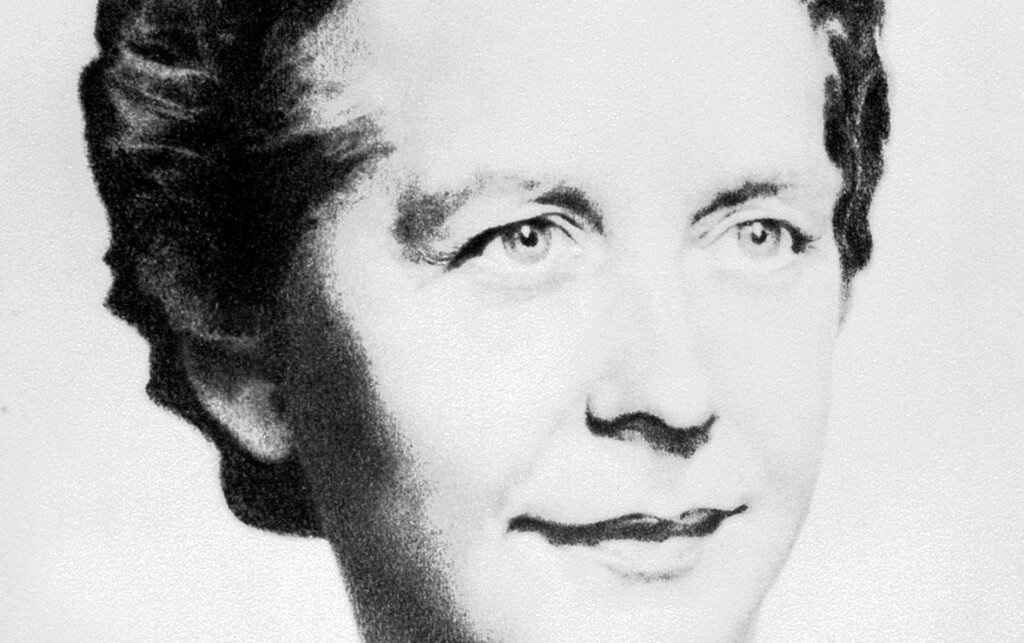
Her later fate makes this history particularly painful. After surviving Nazi imprisonment, Horáková was arrested by the communist regime, condemned in a fabricated political trial and executed on 27 June 1950.
Remembering her at Terezín connects two periods of persecution through the life of a woman who opposed both dictatorships.
Escape from the Small Fortress
On 6 December 1944, three prisoners—Josef Mattas, Miloš Ešner and František Maršík—escaped directly from the Small Fortress.
Fellow prisoner Otakar Cvrček helped with their preparations. Using a small ladder, the men crossed the fortifications and negotiated the waterlogged defensive ditches. Darkness, strong wind and icy weather helped conceal their movements.
All three reached hiding places outside the prison. Ešner and Maršík were recaptured in spring 1945, while Mattas remained at liberty until liberation. All three survived the war.
Their escape depended on preparation, assistance and circumstances they could not fully control. Getting beyond the walls was only the beginning. Finding shelter in occupied territory exposed both the fugitives and anyone helping them to further danger.
How the Terezín ghetto was established
On 24 November 1941, the first transport of 342 Jewish men arrived from Prague. They were required to prepare accommodation and infrastructure for the prisoners who would follow.
Initially, Jewish prisoners were confined to barracks while the town’s civilian population remained nearby. During the first half of 1942, the non-Jewish inhabitants were forced to leave, and the ghetto expanded throughout Terezín.
Alongside Czech Jews, prisoners arrived from Germany, Austria, the Netherlands, Denmark and other countries. The Nazis also used Terezín as a so-called ghetto for the elderly, confining older Jews, decorated First World War veterans and certain prominent individuals.
Inside, ordinary buildings became overcrowded living quarters. Obtaining food, maintaining hygiene and caring for relatives became daily struggles. The possibility of another transport hung over prisoners’ lives.
According to the United States Holocaust Memorial Museum, approximately 140,000 Jews passed through the ghetto between November 1941 and 20 April 1945. Around 34,000 died there, while approximately 88,000 were deported onwards to other ghettos, camps and killing sites. Only a small proportion of those deported survived.
These figures concern the Jewish ghetto, not the separate Gestapo prison. Further evacuation transports arrived during the final weeks of the war.
From Terezín to Mauthausen: Eva Clarke’s family
The story of Eva Clarke connects Terezín with a child born at Mauthausen near the end of the war.
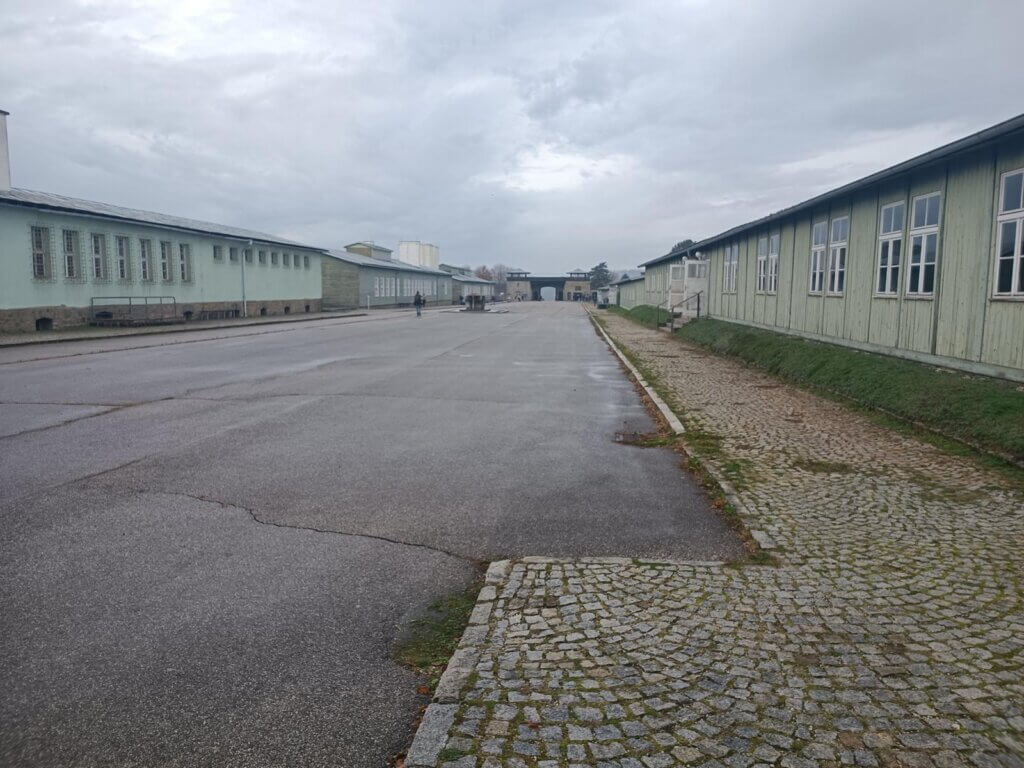
Her parents, Anka Kauderová and Bernd Nathan, married in Prague in 1940. In December 1941, they were deported to Terezín, where they remained until autumn 1944.
Their first child, a boy named Dan, was born during their imprisonment. He died of pneumonia at just two months old.
When Bernd was deported to Auschwitz, Anka volunteered to follow him, hoping they would be reunited. She never saw him again. She was already pregnant with Eva, although her pregnancy was not yet visible.
Anka was transferred from Auschwitz to forced labour in Freiberg, Germany. An evacuation transport later took her to Mauthausen, where Eva was born on 29 April 1945, shortly before liberation.
Mother and daughter survived. Bernd did not.
Their journey shows how Terezín connected with a wider system of deportation and forced labour. It also gives that history a family’s names, relationships and losses.
Eva’s story continues in our Mauthausen concentration camp article, including the babies born there during the final weeks of the war and the circumstances in which mothers and children survived.
The children’s drawings and Friedl Dicker-Brandeis
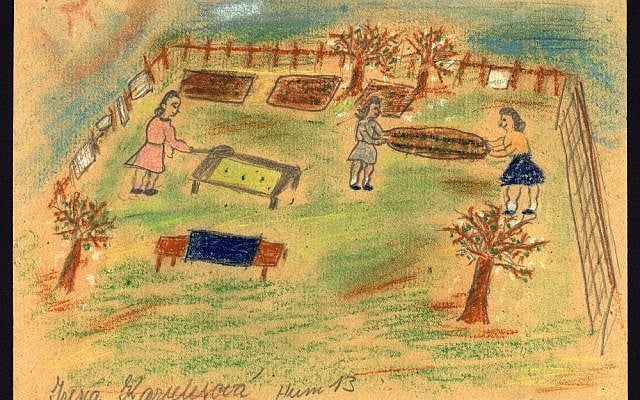
Some of Terezín’s most personal surviving records were created by children.
Artist and teacher Friedl Dicker-Brandeis, a former Bauhaus student, organised art classes within the ghetto’s largely clandestine educational activities.
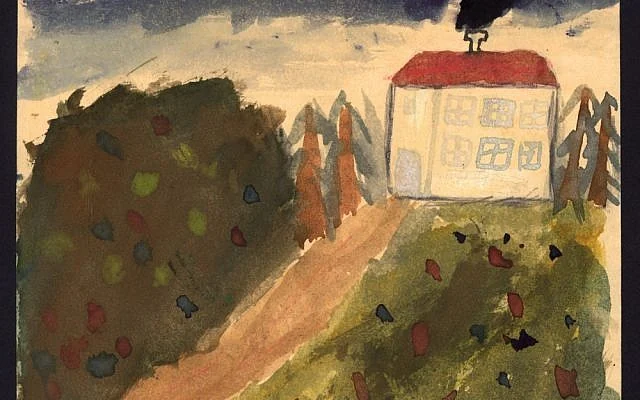
The drawings show imprisonment, but also memories of home, celebrations, imagined journeys and hopes for the future. They reveal how individual children understood their surroundings and expressed themselves.
Before her deportation to Auschwitz, Dicker-Brandeis concealed approximately 4,500 children’s drawings in two suitcases.
Recovered after the war, they became part of the Jewish Museum in Prague’s collection. Dicker-Brandeis was murdered at Auschwitz in 1944.
The drawings preserve something that transport lists cannot. They allow us to encounter children with interests, memories and ambitions, rather than remembering them only through the circumstances of their deaths.
Music and theatre under persecution
Prisoners organised concerts, lectures, theatrical performances and other cultural activities despite deprivation and the threat of deportation.
Among the best-known productions was Brundibár, the children’s opera by Hans Krása. Rafael Schächter conducted performances of Verdi’s Requiem, while other prisoners formed choirs, orchestras and jazz ensembles.
Rehearsing and performing offered opportunities for concentration, companionship and expression. These activities helped prisoners maintain relationships and parts of their identities under extreme pressure.
Their existence must never be mistaken for evidence of humane imprisonment. The Nazis later exploited the prisoners’ cultural achievements to disguise the reality of the ghetto.
The Red Cross visit: a carefully staged deception
On 23 June 1944, a delegation including representatives of the International Committee of the Red Cross and Denmark visited Terezín.
The Nazi authorities prepared selected streets, buildings and public spaces for inspection. Activities were staged, and the visitors followed a controlled route intended to suggest an orderly community.

The preparations also involved deportation. Approximately 7,500 prisoners were sent to Auschwitz in May 1944, reducing overcrowding before the visit.
The delegation therefore saw a presentation constructed by the authorities responsible for the prisoners’ confinement. Its subsequent positive reports demonstrated how effectively this arrangement had concealed their suffering.
The visit remains a disturbing example of how controlled access and carefully selected scenes can disguise systematic persecution.
Kurt Gerron and the Nazi propaganda film
The deception continued with a film shot in August and September 1944.
Kurt Gerron, a German Jewish actor and director imprisoned in Terezín, was compelled to work on the production under Nazi authority.
Its title was Theresienstadt: A Documentary Film about the Jewish Settlement Area. Surviving fragments show work, performances, recreation and apparently healthy prisoners, concealing the coercion and deprivation surrounding them.
After filming, deportations resumed. Gerron was transported to Auschwitz in October 1944 and murdered. Many others involved in the production were also deported and killed.
The film was never publicly released during the war. Its surviving footage must be understood as propaganda rather than an honest record of daily life.
Did Terezín have gas chambers?
Terezín did not operate as an extermination centre where prisoners were systematically murdered in gas chambers.
There is, however, an important detail: the Nazis began constructing a gas chamber near the end of the war, but it was never completed. Saying there were no operating gas chambers is therefore more accurate than suggesting no such plans existed.
This distinction explains Terezín’s particular role without diminishing the deaths caused by imprisonment or the murder of people deported from here.
Liberation and the typhus epidemic
In the final weeks of the war, evacuation transports brought severely weakened prisoners to Terezín from other camps. Conditions deteriorated, and epidemic typhus spread.
On 2 May 1945, the ghetto and Small Fortress came under the official protection of the International Committee of the Red Cross. Soviet troops arrived on 8 May.
The end of Nazi control did not immediately end the suffering.
Jewish prisoner doctors, Czech medical teams and Soviet medical personnel worked to contain the epidemic and care for the sick. People continued to die around the time of liberation.
For survivors, freedom was followed by recovery and the search for relatives. Returning home could mean discovering that the family and community they remembered had been destroyed.

Visiting Terezín from Prague
A thoughtful visit brings together the separate histories of the Small Fortress and the Jewish ghetto.
The prison cells and courtyards explain one part of Nazi repression. The town’s streets and former barracks reveal another. Drawings, documents, photographs and personal testimonies connect these places with the people imprisoned within them.
For WWII enthusiasts, historians, teachers and students, Terezín offers an opportunity to examine how persecution was organised, how propaganda concealed violence and how individuals responded under extreme pressure.
Our guided Terezín tour from Prague provides historical context and time for questions. Private travellers, schools and larger groups are welcome to inquire about a visit suited to their interests.
Much of what we know about Terezín survives because people recorded, concealed or later shared their experiences. A child’s drawing, an account of escape or Eva Clarke’s telling of her mother’s story allows us to understand something that the buildings alone cannot.