
Discover Stachelberg, the largest planned artillery fortress of Czechoslovakia’s pre-war border fortifications, and explore the history of the Sudetenland, the mobilisation of 1938 and the extraordinary defensive system built to resist Nazi Germany.
September 1938: Czechoslovakia Mobilises Its Army to Defend the Republic Against Nazi Germany
On the evening of 23 September 1938, Czechoslovakia announced general military mobilisation. Across the country, reservists reported for duty, military units prepared for deployment, and soldiers occupied defensive positions along the republic’s borders.
The threat of war with Nazi Germany had become immediate.
Within days, the Czechoslovak armed forces had mobilised approximately 1.13 million personnel. The country possessed a substantial army, a highly developed armaments industry and an extensive network of border fortifications.
These military preparations were not improvised. Czechoslovakia had spent years preparing for the possibility of German aggression, investing enormous resources in defensive structures designed to protect the young republic.
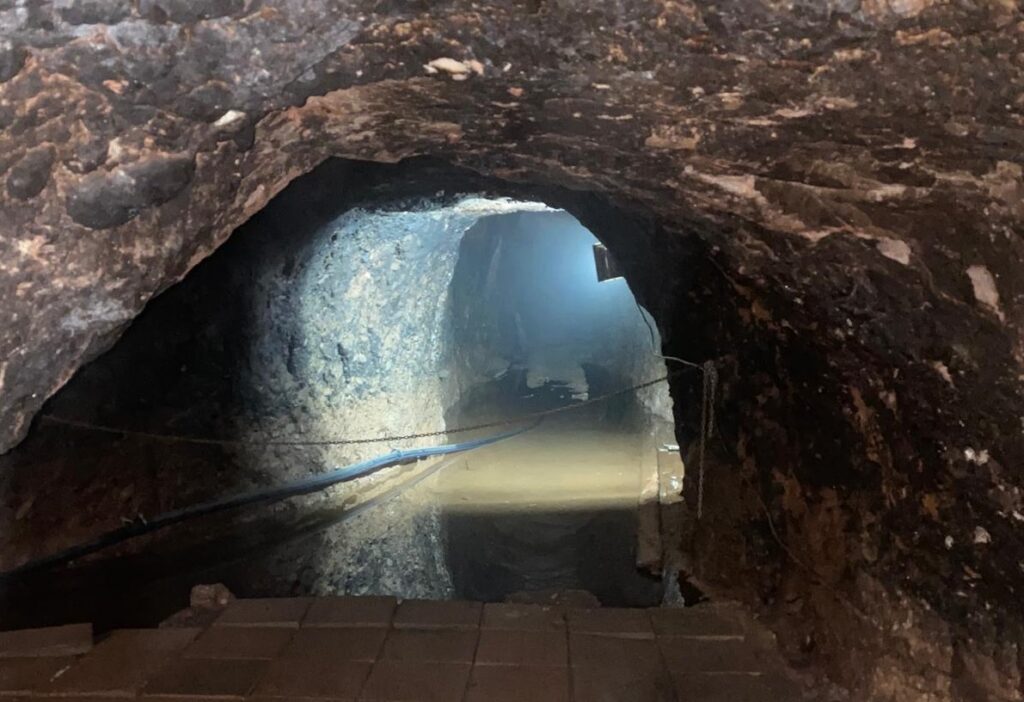
By September 1938, approximately 9,600 light defensive structures and more than 260 heavy fortifications had been constructed along strategically important sections of the country’s borders.
Among the most ambitious of these projects was Stachelberg Artillery Fortress, an enormous underground military complex hidden in the mountains of northeastern Bohemia.
Designed to become the largest artillery fortress in the Czechoslovak defensive system, Stachelberg was intended to protect a strategically important approach from German territory towards the Czech interior.
Today, it remains one of the most remarkable surviving examples of the country’s pre-war military engineering. The fortress can be explored as part of our Private Czechoslovak Border Fortifications Tour from Prague, which also offers the opportunity to visit Hanička Artillery Fortress.
Yet despite the extraordinary effort invested in its construction, Stachelberg would never fulfil its intended military purpose.
The Munich Agreement, signed only days after the mobilisation, would change the country’s future and leave one of its greatest defensive projects unfinished.
Why Czechoslovakia Built an Extensive Network of Border Fortifications Before World War II
When the First Czechoslovak Republic was established on 28 October 1918, it inherited a strong industrial base from the former Austro-Hungarian Empire.
Its engineering and armaments industries, including Škoda Works and Československá zbrojovka, were among the most advanced in Europe.
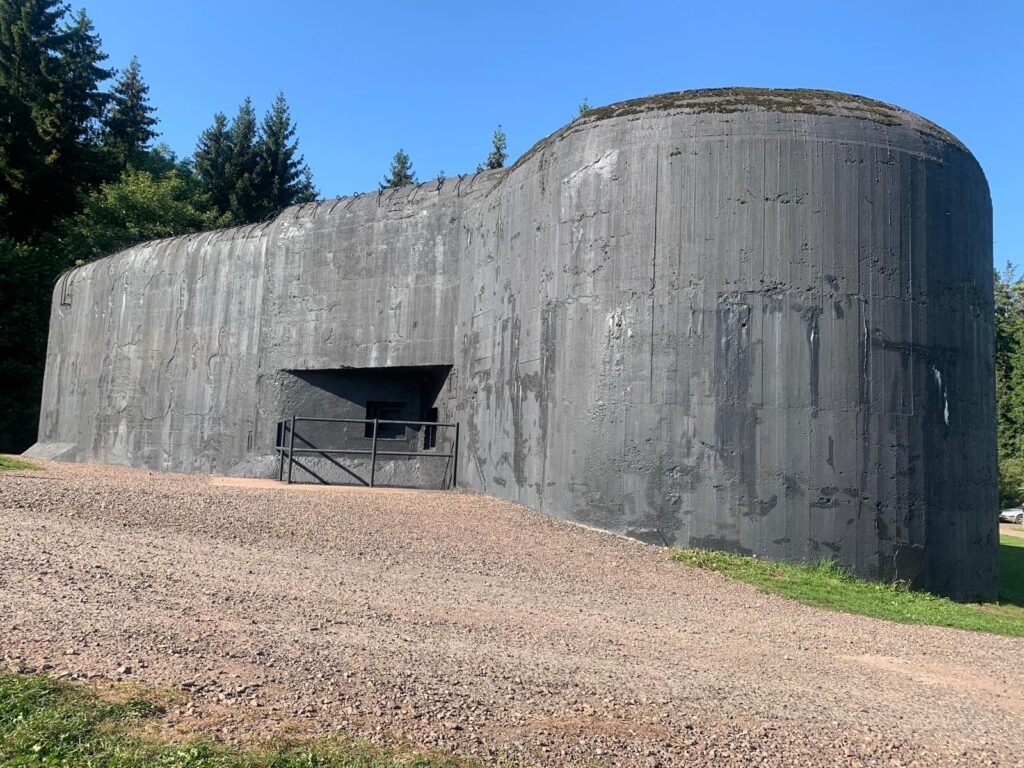
Nevertheless, defending the new country presented enormous geographical challenges.
Czechoslovakia possessed long, vulnerable borders, and its elongated territorial shape made it particularly exposed to invasion from several directions.
The situation deteriorated rapidly after Adolf Hitler came to power in Germany in January 1933.
German rearmament, expansionist ambitions and increasing territorial demands posed a direct threat to Czechoslovak independence.
Military planners recognised that the army required a defensive system capable of delaying an enemy advance while the country mobilised its reserves.
In March 1935, Czechoslovakia established the Fortification Directorate, known as Ředitelství opevňovacích prací (ŘOP). General Karel Husárek subsequently played a leading role in directing the programme.
French military engineers contributed expertise, drawing partly on experience gained from constructing France’s Maginot Line.
On 4 June 1936, the Supreme National Defence Council approved an extensive fortification programme covering more than 1,200 kilometres of strategically important frontier.
The project was expected to take approximately 10–15 years, with estimated expenditure of around ten billion Czechoslovak crowns.
As the European political situation worsened, however, military planners were forced to accelerate construction.
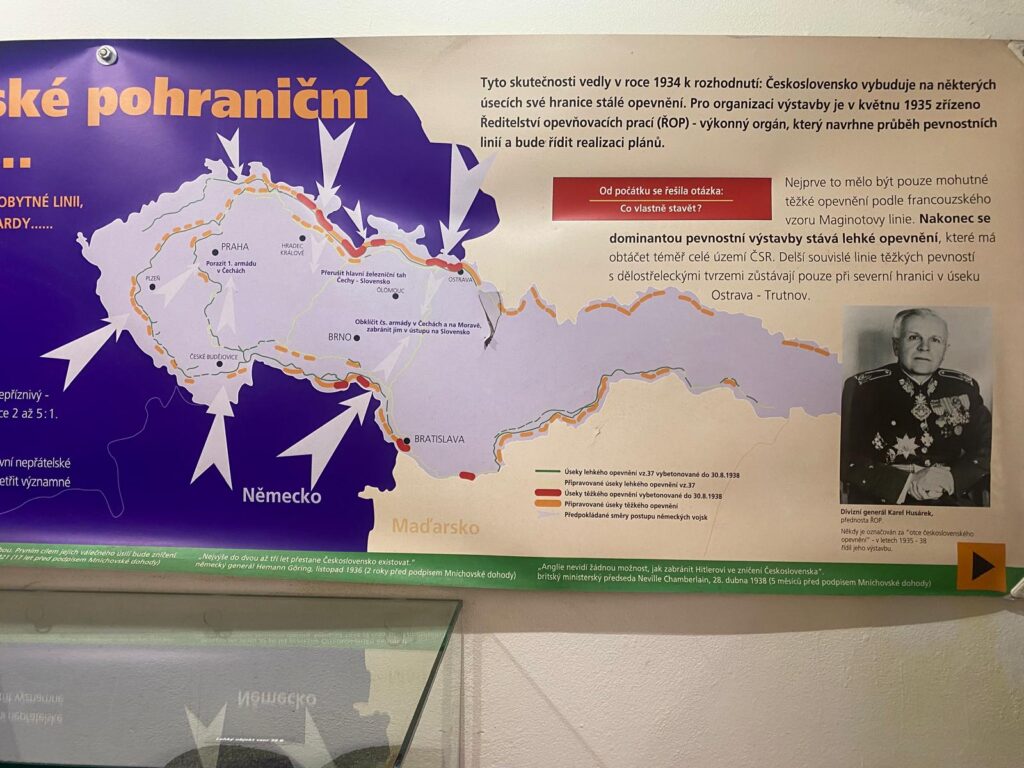
The Original Czechoslovak Fortification Plan and Military Defence Strategy
Contrary to popular belief, the Czechoslovak fortifications were never intended to function as an impenetrable concrete wall.
Their purpose was to delay enemy forces, protect important transport routes, prevent sudden breakthroughs and provide sufficient time for military mobilisation.
The defensive system consisted of several interconnected elements.
Smaller reinforced-concrete bunkers, commonly known as řopíky, protected vulnerable sections of the frontier with overlapping machine-gun fire.
Larger infantry blockhouses provided stronger defensive positions, often equipped with anti-tank weapons and heavy machine guns.
At strategically important locations, enormous artillery fortresses were designed to provide fire support across extensive sections of the defensive line.
Anti-tank obstacles, trenches and field fortifications strengthened the system.
The overall strategy also allowed for organised military withdrawal towards prepared positions further inland if parts of the border could no longer be defended.
The army was therefore not relying exclusively on concrete fortifications. These structures formed part of a wider military plan involving infantry, artillery, mobile units and reserves.
The scale of the undertaking was extraordinary, particularly for a country with a population of approximately 15 million.
By September 1938, construction was progressing rapidly, although the entire programme remained far from completion.
One of its most impressive projects was taking shape in the mountains near Trutnov.
Stachelberg Artillery Fortress: Czechoslovakia’s Largest Planned Fortress in the Sudetenland
Stachelberg is situated on a ridge above the village of Babí, between Trutnov and Žacléř, close to the Krkonoše Mountains in northeastern Bohemia.
Today, the fortress lies within the Hradec Králové Region of the Czech Republic.
In 1938, however, this area formed part of the strategically important Czechoslovak borderlands associated with the Sudetenland.
The Sudetenland was not a separate administrative region of the First Czechoslovak Republic. Rather, the term referred broadly to its predominantly German-speaking border territories, which became the focus of Hitler’s territorial demands.
Stachelberg’s location was selected because of the military importance of the surrounding landscape.
The nearby Libava Pass, known in Czech as Libavské sedlo, offered a potential invasion route from German territory towards Trutnov and the interior of Bohemia.
The fortress was intended to prevent German forces from advancing through this corridor, while supporting neighbouring infantry fortifications with powerful artillery fire.
Its position on elevated ground provided an important advantage for observation and the defence of surrounding approaches.
The name Stachelberg originated from the German name of the ridge. The fortress was also known by its Czech name, Ježová hora.
Following investigations of several potential locations, the final site was selected in 1936.
Construction began on 16 October 1937.
Had the project been completed, Stachelberg would have become the largest artillery fortress in the entire Czechoslovak defensive system.
Today, the museum describes it as the largest modern fortress complex in the Czech Republic and one of the largest in Europe.
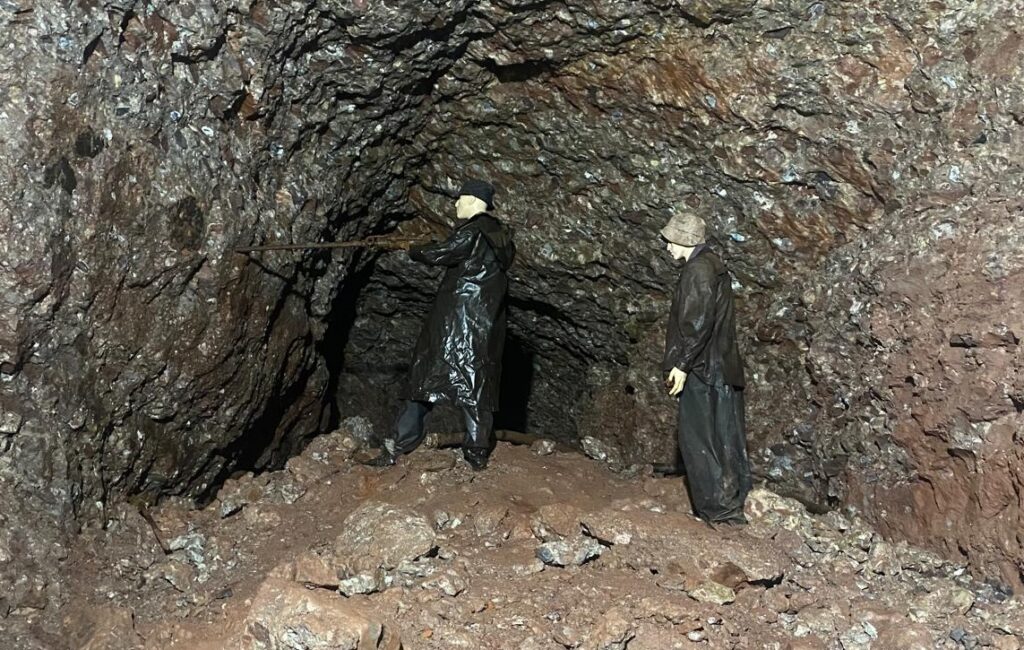
Inside Stachelberg: The Enormous Underground Military Fortress Designed to Protect Czechoslovakia
The original plans for Stachelberg were exceptionally ambitious.
The fortress was designed to contain 12 principal defensive structures, with most connected through an extensive system of underground passages and chambers.
The broader construction sector also included independent infantry bunkers, intended to strengthen the surrounding defensive line.
The planned underground network extended approximately 3.5 kilometres in total, with passages and chambers reaching depths of more than 50 metres beneath the surface.
The projected garrison consisted of 778 soldiers, supported by military personnel assigned to nearby defensive positions.
The complex was designed to function almost as an underground military town.
It would contain protected barracks, ammunition storage chambers, technical facilities, ventilation systems, power generation equipment and underground transport routes.
Ammunition and supplies could be moved between different sections of the fortress without exposing soldiers to enemy fire above ground.
The underground construction also provided protection against artillery bombardment.
What Weapons and Artillery Was Stachelberg Originally Designed to Carry?
Stachelberg was designed to possess formidable firepower.
Its planned principal armament included ten 100 mm howitzers, four 120 mm mortars, anti-tank guns and numerous heavy and light machine guns.
Artillery weapons would be installed in reinforced-concrete fighting blocks and specialised armoured turrets.
The howitzers were intended to provide defensive fire across important approaches, while the mortars and machine guns would protect shorter-range positions and vulnerable areas.
The anti-tank guns would target armoured vehicles attempting to penetrate the defensive line.
The fortress’s artillery was designed to cooperate with surrounding fortifications, creating overlapping defensive zones.
The planned combination of artillery and mortar weapons would have enabled the fortress to deliver intense fire against advancing enemy formations.
The sheer scale of this proposed firepower demonstrates how seriously Czechoslovak military planners regarded the defence of the Trutnov region.
Stachelberg was not simply another concrete bunker.
It was intended to become a major military stronghold, defending an entire sector of the republic’s northern frontier.
Construction of Stachelberg Between 1937 and 1938: Building a Military Fortress Against the Clock
The construction contract was awarded to the Prague-based companies Ing. Zdenko Kruliš and Konstruktiva.
The original construction period was approximately 24 months, with completion scheduled for September 1939.
At certain stages, as many as 1,500 workers were employed on the project.
Excavation proceeded beneath the mountain while reinforced-concrete defensive structures were built above ground.
The work involved enormous quantities of concrete, steel and excavated rock, together with the complex logistical challenge of transporting equipment and construction materials to the site.
By the summer of 1938, several independent infantry bunkers had been completed in the surrounding area.
Within the principal fortress complex, however, only one major fighting structure was concreted before construction stopped.
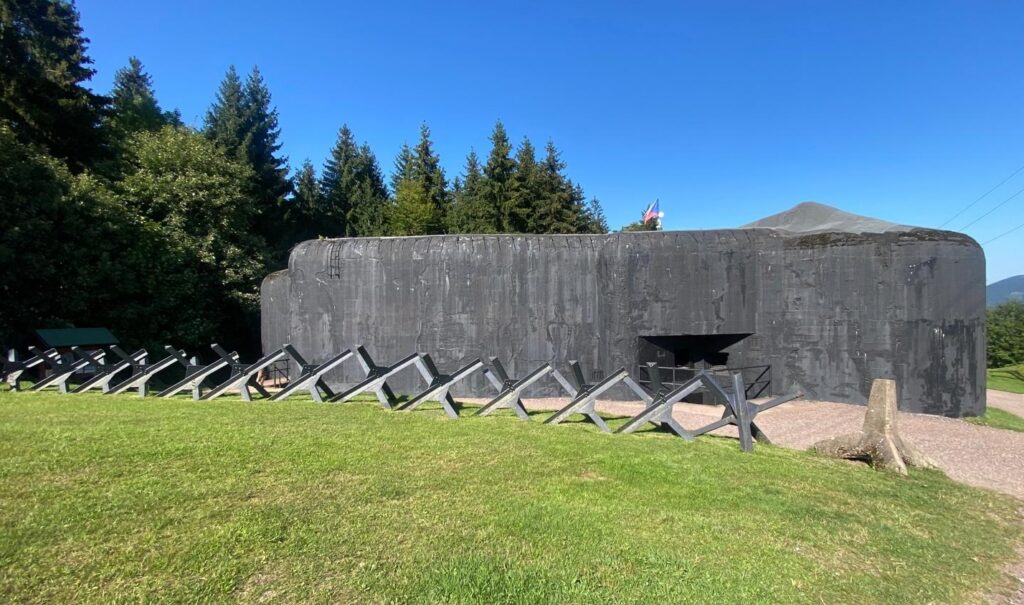
This was infantry blockhouse T-S 73.
Its reinforced-concrete shell was constructed between 23 and 31 August 1938, requiring approximately 3,177 cubic metres of concrete.
It remains one of the largest infantry blockhouses constructed as part of the Czechoslovak border fortification programme.
Today, T-S 73 serves as the principal museum building and entrance to Stachelberg’s underground passages.
Although much of the underground excavation was well advanced by September 1938, most of the internal concrete work and technical installations remained unfinished.
The planned artillery structures, armoured turrets, weapons systems and supporting infrastructure had not yet been completed.
The fortress was therefore nowhere near operational readiness.
And before the builders could finish their work, the political crisis reached its decisive moment.
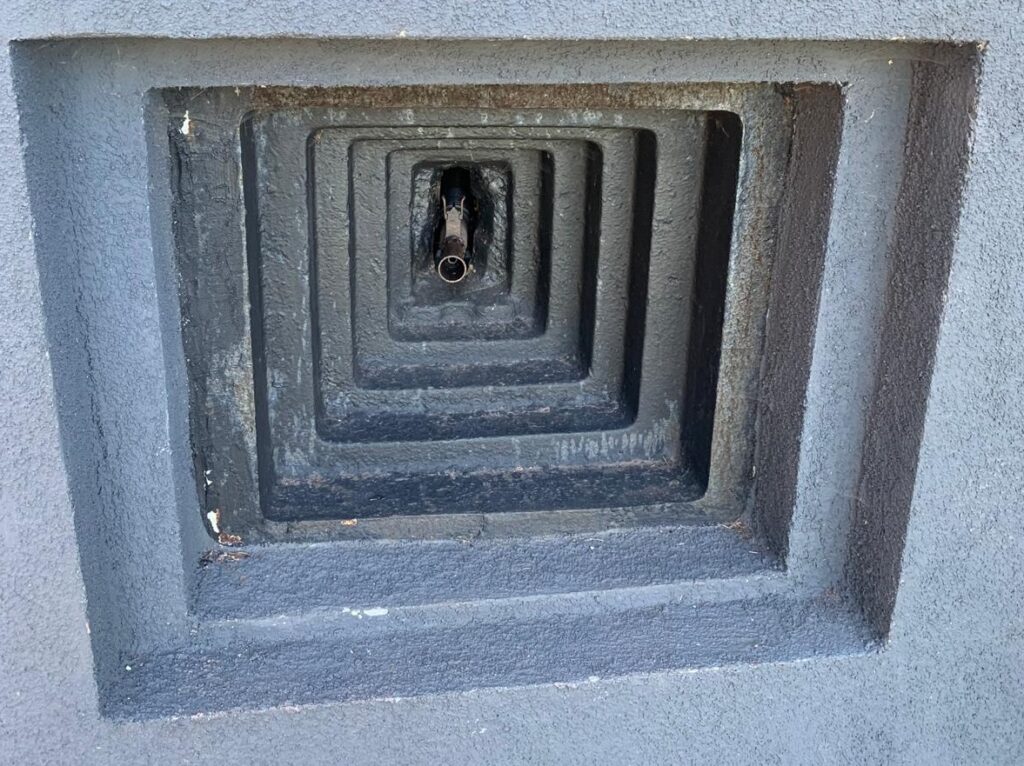
The Munich Agreement of September 1938: How Czechoslovakia Lost Its Border Fortifications
On 29–30 September 1938, representatives of Germany, Italy, Britain and France met in Munich to decide the future of Czechoslovakia’s border territories.
Adolf Hitler, Benito Mussolini, Neville Chamberlain and Édouard Daladier agreed that Czechoslovakia would surrender the Sudetenland to Nazi Germany.
Czechoslovakia itself was excluded from the negotiations.
The agreement became known in Czech and Slovak historical memory as the Munich Betrayal.
For a country whose army had just mobilised to defend its independence, the consequences were devastating.
The decision required Czechoslovakia to relinquish extensive border territories, including many of the defensive fortifications constructed at enormous financial and human expense.
German forces began occupying the ceded areas on 1 October 1938.
Czechoslovak soldiers who had prepared their positions for battle were ordered to withdraw.
The fortifications intended to resist a German invasion were handed over without the major military confrontation for which they had been built.
Stachelberg was among the abandoned positions.
The unfinished fortress passed into German hands, and its underground passages were left to flood.
Construction never resumed.
The largest planned artillery fortress in Czechoslovakia had become a military monument before it ever had the opportunity to function as one.
What Happened to Czechoslovak Fortifications After Nazi Germany Occupied the Sudetenland?
The German takeover of the Sudetenland gave the Wehrmacht access to an extensive network of modern defensive structures.
German military engineers were particularly interested in the design, concrete quality and resistance of these fortifications.
The captured bunkers provided an opportunity to study military construction techniques and test weapons against reinforced-concrete positions.
Some structures were examined in detail, while others were stripped of valuable armoured components or used for experimental artillery fire.
The German military also investigated methods of attacking fortifications equipped with heavy machine guns, anti-tank weapons and armoured observation positions.
These investigations became increasingly important as Germany prepared for military operations against countries possessing their own permanent defensive systems.
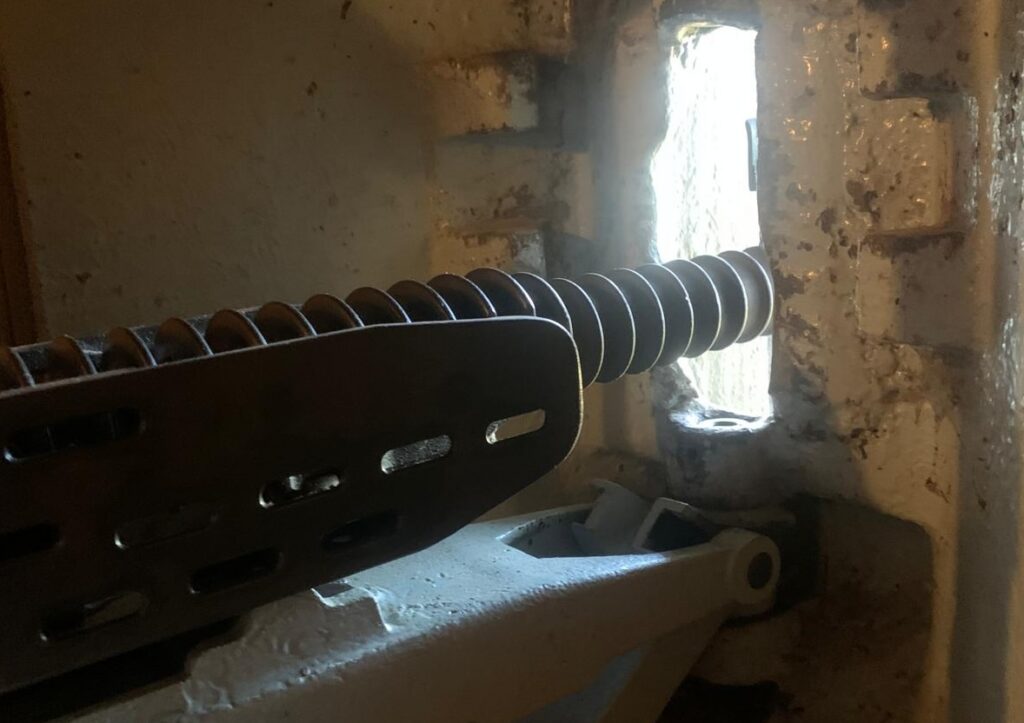
Nazi Weapons Experiments: Could German Artillery Destroy the Czechoslovak Bunkers?
One of the most fascinating chapters in the history of Czechoslovakia’s border fortifications concerns the German artillery and explosive experiments conducted after 1938.
The Wehrmacht tested conventional artillery, heavy-calibre weapons, specialised ammunition and demolition charges against captured concrete structures.
Among the important testing locations was Hůrka Artillery Fortress near Králíky.
German artillery trials began there during the occupation and continued as military engineers investigated the resistance of reinforced concrete.
Various artillery weapons, including heavy-calibre guns, were used in experiments designed to evaluate the strength of the fortifications.
German engineers also tested demolition charges and methods of damaging armoured components.
Some tests produced limited results, demonstrating the exceptional strength of Czechoslovak reinforced-concrete construction.
Others caused serious structural damage.
The Germans discovered that conventional artillery could struggle against the heaviest concrete walls, but sufficiently powerful weapons and carefully placed explosives could still compromise defensive structures.
The fortifications were extremely robust, but not indestructible.
Hanička and Hůrka: German Experiments With Concrete-Penetrating Artillery and Explosives
Similar experiments took place at Hanička Artillery Fortress in the Orlické Mountains.
During 1940, German artillery was used against several fortress structures to test the quality of their reinforced concrete.
German combat engineers also experimented with specialised explosive charges against armoured components.
Some traces of these tests remain visible today.
Another important development involved specialised concrete-penetrating projectiles produced by the German company Röchling.
These unusual steel projectiles were designed to penetrate reinforced concrete through their shape and kinetic energy.
Trials involving this type of ammunition took place at several former Czechoslovak fortifications, including Hůrka and Dobrošov.
The tests demonstrated that heavy concrete fortifications presented a serious engineering challenge, even to an army equipped with modern artillery.
However, the results should not be interpreted as proof that Czechoslovak bunkers could never be destroyed.
Rather, they provide evidence of the extraordinary quality of the original defensive construction and the considerable effort required to overcome it.
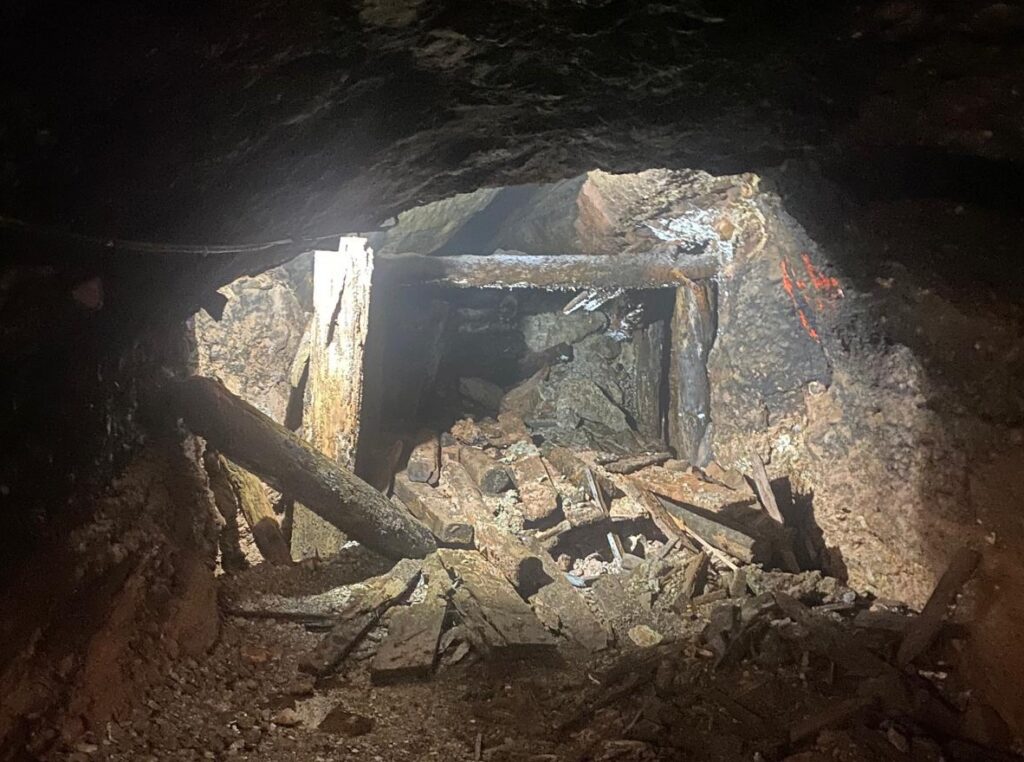
Did the Nazis Attempt to Blow Up Stachelberg Fortress Itself?
This distinction is important when discussing Stachelberg.
Although German artillery and explosive testing is well documented at other Czechoslovak fortresses, there is no comparable evidence of a major German weapons-testing programme at Stachelberg itself.
According to the Stachelberg Museum’s historical records, German personnel inspected the unfinished complex after taking control of the area but subsequently abandoned it.
The underground passages remained flooded, and the fortress was never completed.
Towards the end of the Second World War, German forces made preparations to reuse some of the smaller bunkers in the surrounding area against the approaching Red Army.
No battle ultimately took place at Stachelberg.
The fortress therefore experienced neither the defensive battle for which it had been designed nor the extensive weapons trials carried out at some other captured fortifications.
Nevertheless, its history remains inseparable from the wider fate of the Czechoslovak border defence system.
Could Czechoslovakia Have Defended Itself Against Nazi Germany in September 1938?
Whether Czechoslovakia could have resisted a German invasion in September 1938 remains one of the most debated questions in the country’s modern history.
The republic possessed a substantial army, an advanced arms industry and an extensive defensive network.
Many soldiers were ready to fight, and the country’s military leadership had developed plans for organised resistance.
The fortifications would have created serious obstacles in areas where heavy defensive structures had been completed and properly equipped.
Yet there were also significant disadvantages.
The German annexation of Austria in March 1938 had exposed Czechoslovakia’s southern flank.
Large sections of the fortification system remained unfinished, while Germany possessed the ability to concentrate its forces against selected points of attack.
Czechoslovakia’s political and military position also depended heavily on the response of its allies, particularly France.
The ability to resist an initial German offensive and the ability to sustain a prolonged war were two very different challenges.
The German experiments carried out after the occupation demonstrated the resistance of individual fortifications, but they could not establish the outcome of an entire military campaign.
The events of September 1938 therefore left a question that historians continue to examine.
What would have happened had Czechoslovakia been given the opportunity to defend its borders?
Stachelberg, unfinished and abandoned before it could serve its intended purpose, remains one of the most striking physical reminders of that unanswered question.
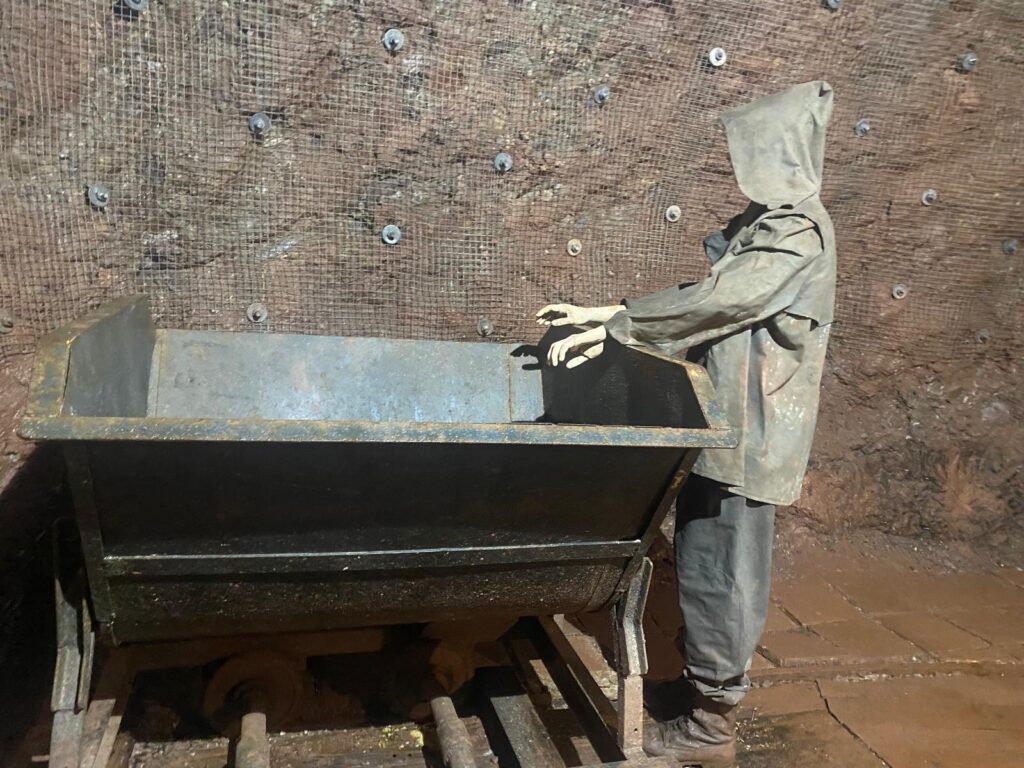
Stachelberg After World War II: From Abandoned Fortress to Military History Museum
The end of the Second World War did not immediately bring a new purpose to Stachelberg.
Much of the underground complex remained flooded, while the abandoned military structures gradually deteriorated.
In 1958, Stachelberg was designated a protected cultural monument.
Despite this recognition, the fortress continued to suffer from neglect.
In 1966, more than 100 tonnes of highly toxic agricultural pest-control chemicals were stored inside the T-S 73 blockhouse.
For years, this enormous military structure remained inaccessible to the general public.
Its eventual rescue was largely the result of dedicated military history enthusiasts.
In 1988, a group began working towards preserving the site and establishing a museum.
The Fortis cooperative was founded in 1990, and extensive work followed to remove hazardous materials, restore the buildings and prepare historical exhibitions.
In 1993, Stachelberg opened to visitors.
The underground passages, however, were still largely inaccessible because of flooding.
During the following years, drainage and restoration work gradually made parts of the underground complex accessible.
In 2001, the first visitors were finally able to enter the extensive subterranean passages.
Further restoration projects followed, including the reconstruction of fortification equipment, exhibitions and additional underground spaces.
The fortress continues to be maintained and developed by dedicated enthusiasts who have helped preserve this remarkable part of Czechoslovak military history.
Exploring Stachelberg Fortress: My Personal Visits in August 2023 and Autumn 2025
I first visited Stachelberg in August 2023 and returned in early autumn 2025.
As a licensed Prague guide specialising in Czechoslovak history, World War II and the resistance against Nazi occupation, I have always been fascinated by historical places where the physical surroundings help explain events that shaped our country.
Stachelberg is certainly one of them.
The scale of its underground construction is extraordinary, particularly when considering how much work was accomplished in less than a year.
Walking through a complex that was never completed brings a different perspective to the events of September 1938.
Historical documents and photographs can describe the mobilisation, the Munich Agreement and the original defence plans. Yet exploring the surviving military structures provides a far more tangible understanding of the enormous preparations undertaken by the First Czechoslovak Republic.
What makes Stachelberg especially interesting is that its unfinished condition is itself an important part of the historical story.
It allows visitors to appreciate both the ambition of the original design and the abrupt interruption of construction.
Returning to the fortress in 2025 gave me another opportunity to appreciate its historical significance and the continuing efforts to preserve it.
For anyone interested in Czechoslovakia’s pre-war history, military engineering or the events leading to the Second World War, Stachelberg is a remarkable place to explore.
It is certainly one of the historical destinations I am pleased to recommend to visitors wishing to discover more of the Czech Republic beyond Prague.
Visiting Stachelberg Fortress Today: Underground Tours, Exhibitions and Seasonal Opening Hours
Stachelberg is located near Babí, between Trutnov and Žacléř, in the Hradec Králové Region of northeastern Bohemia.
The fortress museum offers visitors an opportunity to explore one of the largest surviving examples of Czechoslovakia’s pre-war military engineering.
The main exhibition is housed inside the enormous T-S 73 infantry blockhouse.
Visitors can discover historical photographs, original military equipment, reconstructed weapons, models and detailed information about the country’s extensive border defence programme.
A guided underground visit leads into the impressive passages and chambers excavated beneath the mountain.
The underground tour provides a particularly interesting insight into the scale of the original project and the engineering challenges faced by its builders.
Only part of the underground network is accessible to visitors, with other sections remaining closed for safety and preservation reasons.
Above ground, the surrounding area contains additional fortifications, reconstructed defensive positions and opportunities to explore the military landscape.
The nearby Eliška lookout tower offers views across the surrounding countryside.
When Is Stachelberg Fortress Open to Visitors?
The museum operates according to a seasonal schedule, with the most extensive opening hours generally available during the summer months.
Spring and autumn visits are more limited, while selected winter opening dates may also be available.
Opening arrangements can change, particularly for underground visits and organised groups.
Visitors should therefore confirm current opening hours directly with the fortress museum before travelling.
The underground remains cold throughout the year, with temperatures around 9°C. Warm clothing and sturdy footwear are recommended.
The underground route also involves a considerable number of steps and may not be suitable for visitors with limited mobility.
Official website: Stachelberg Fortress Museum
Visit Stachelberg or Hanička on a Private Czechoslovak Border Fortifications Tour From Prague
At Operation Anthropoid Tours, we offer private historical excursions from Prague to some of the most remarkable surviving Czechoslovak border fortifications.
Our Czechoslovak Border Fortifications Tour provides an opportunity to visit either Stachelberg Artillery Fortress or Hanička Artillery Fortress, depending on your interests, preferred travel date and museum availability.
These excursions are designed for visitors who wish to explore the history of the First Czechoslovak Republic, the Munich Crisis and the military preparations preceding World War II.
The tours include private return transportation from Prague, an English-speaking licensed guide and a visit to the selected fortress.
They can also be adapted for military history enthusiasts, private groups, schools and visitors with a particular interest in Czechoslovakia’s wartime history.
The approximate duration is 8–10 hours, including transportation and time for a countryside lunch break.
Our regular fortifications excursions are offered between May and October.
Visits outside the main season may be possible on request, depending on the fortress’s opening arrangements, weather conditions and availability of guided visits.
Prices are calculated individually according to the destination and number of participants.
Explore Our Private Czechoslovak Border Fortifications Tour
From the Munich Betrayal to Operation Anthropoid: The Continuing History of Czechoslovak Resistance
The history of Stachelberg belongs to a much broader story of Czechoslovakia’s struggle for independence.
The Munich Agreement of September 1938 was followed by the disintegration of the republic.
On 15 March 1939, German forces occupied the remaining Czech lands. The Protectorate of Bohemia and Moravia was established the following day.
Czechoslovak soldiers, politicians and civilians who refused to accept the occupation became involved in resistance activities both at home and abroad.
Many escaped to fight alongside Allied forces, while others helped establish underground resistance organisations within the occupied homeland.
Among those who continued the struggle were the Czechoslovak paratroopers Jozef Gabčík, a Slovak, and Jan Kubiš, a Czech.
Their mission, Operation Anthropoid, culminated in the attack on Reinhard Heydrich in Prague on 27 May 1942.
Although the events of 1938 and 1942 belong to different chapters of history, they are connected by Czechoslovakia’s struggle to defend and restore its independence.
The enormous fortifications of the 1930s demonstrate how seriously the republic prepared to protect itself before the occupation.
Operation Anthropoid and the wider resistance movement demonstrate how that struggle continued after the country had lost its independence.
Today, Stachelberg stands as a powerful reminder of a republic that invested enormous resources in preparing for war, mobilised its soldiers and built some of Europe’s most impressive military fortifications.
Yet the largest of those planned fortresses was never completed, and the battle it was designed to fight never took place.
Some fortresses are remembered for the battles fought within their walls. Stachelberg is remembered for the battle it was built to fight, but never did.