
The Czechoslovak Paratrooper Who Betrayed Operation Anthropoid and the Czechoslovak Resistance
There are names connected with Operation Anthropoid that became symbols of courage, loyalty and sacrifice. Karel Čurda became remembered for the opposite reason.
He was not an outsider who accidentally discovered something about the men who killed Reinhard Heydrich. Čurda was himself a Czechoslovak soldier, trained in Britain for special operations and parachuted back into the occupied homeland as a member of the OUT DISTANCE group. He knew other Czechoslovak paratroopers personally, understood the world of clandestine operations and, most dangerously of all, knew some of the families and resistance contacts who had opened their homes to men like him.
That is why his betrayal mattered so much. When Karel Čurda walked into Gestapo headquarters in Prague on 16 June 1942, he was not carrying the name of one man or the address of one safe house. He carried pieces of an entire resistance network, and once he began talking, the damage reached far beyond Operation Anthropoid.
From Britain to a Mission That Went Wrong
Looking back at Čurda, it is tempting to believe there must have been obvious warning signs and that somebody in Britain should simply have recognised what he was capable of before sending him back to occupied Czechoslovakia. Stories circulated later about his drinking and behaviour, and there were claims that other soldiers had questioned his suitability, but historian Jiří Plachý’s examination of the surviving military records gives us a less convenient picture. Čurda had generally been regarded as a capable, motivated and disciplined Czechoslovak soldier; there was nothing obvious in his formal service record that should automatically have prevented his selection for special operations.
OUT DISTANCE consisted of Adolf Opálka, Ivan Kolařík and Karel Čurda and had been organised by the Ministry of National Defence of the Czechoslovak government-in-exile in London. The group was dropped into the Protectorate during the night of 27–28 March 1942 with sabotage and support tasks, including the planned attack on the gasworks in Prague-Michle and the delivery of radio equipment for other Czechoslovak resistance operations. Almost immediately, things began to go wrong: they landed far from the intended area, Opálka was injured, much of their equipment was lost and the three men were forced to separate.
Čurda eventually moved through contacts in Pardubice and Prague and spent time in resistance safe houses, but after the assassination of Reinhard Heydrich on 27 May 1942 he returned to his family in Nová Hlína near Třeboň. For somebody who had been sent into occupied territory on a clandestine mission, returning to relatives was enormously dangerous. Families were obvious points of pressure, their homes could be watched and searched, and anyone found sheltering a Czechoslovak paratrooper could pay with their life.
Then the terror following the assassination began to unfold in front of him.
Arrests spread through the Protectorate, houses were searched, names of people condemned to death appeared in the newspapers and executions followed one after another. General Alois Eliáš, former prime minister of the Protectorate but also a Czechoslovak officer secretly involved in resistance activities, had already been arrested and sentenced to death; after the assassination his execution was carried out at the Kobylisy firing range on 19 June 1942.
And then came Lidice.
The village was destroyed on 10 June. Its men were murdered, the women deported and the children taken away. For anybody connected with the Czechoslovak resistance, the message was impossible to misunderstand: the Germans were prepared to punish families and entire communities while hunting Heydrich’s assassins.
According to the research of Jaroslav Čvančara, these days found Čurda drinking heavily, panicking and behaving increasingly erratically. He knew that he was hiding in his mother’s house and understood perfectly well what discovery might mean for the people around him. He eventually decided to go back to Prague, apparently hoping first to find Josef Valčík, although by then Valčík was already hidden with the other Czechoslovak paratroopers in the Orthodox church in Resslova Street.
Three days earlier, on 13 June, Čurda had already sent an anonymous denunciation naming Jozef Gabčík and Jan Kubiš. It produced no immediate result.
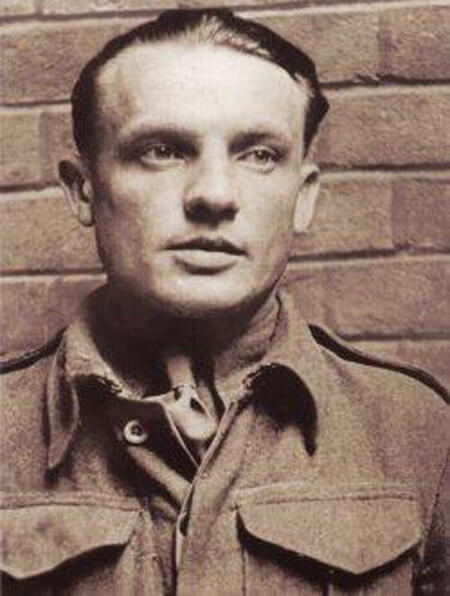
So on 16 June he went to Prague himself and entered the Petschek Palace, headquarters of the Prague Gestapo.
The Day Čurda Began Talking
Čurda did not arrive as a calm man carrying out some carefully prepared plan. According to Čvančara’s research, he was frightened, deeply agitated and behaving in such a way that even the Gestapo initially had trouble understanding what exactly had walked through their door. At one stage he attempted to take poison.
The attempt failed.
Afterwards, he began talking.
He gave the Gestapo names, addresses, contacts and families. He described the people who had sheltered him, remembered places where he had stayed and gave investigators precisely what they had been missing during the enormous manhunt that followed Heydrich’s assassination.
Čurda did not know that the seven Czechoslovak paratroopers were hiding in Resslova Street. What he gave the Gestapo was arguably more useful: a route into the resistance network itself.
The Prague Gestapo had spent weeks searching for Gabčík and Kubiš. Čurda suddenly gave them people who knew other people, and once investigators began pulling on those connections, one address led towards another.
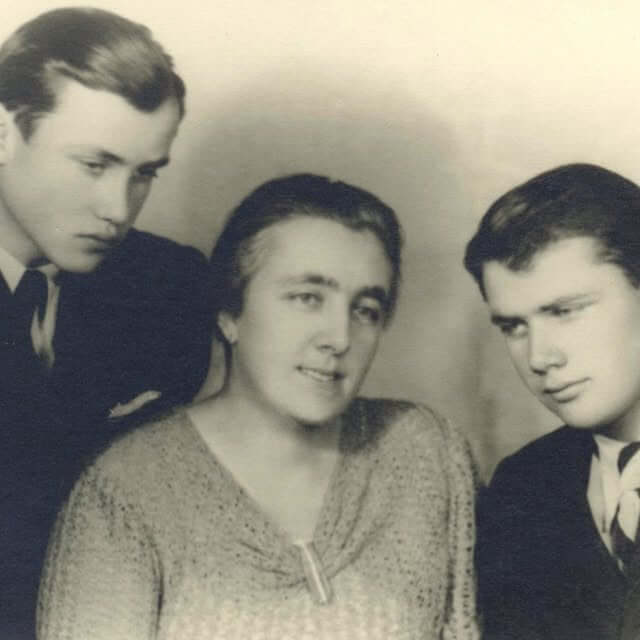
One of the trails led to the Moravec family.
Marie Moravcová, known affectionately among the paratroopers as Auntie Moravec, swallowed poison when the Gestapo entered the family home rather than allow herself to be interrogated. Her husband Alois and their son Vlastimil, known as Aťa, were arrested. Under brutal interrogation the Gestapo eventually extracted from Aťa the information it had been searching for: the paratroopers were hiding in the Orthodox Church of Saints Cyril and Methodius in Resslova Street.
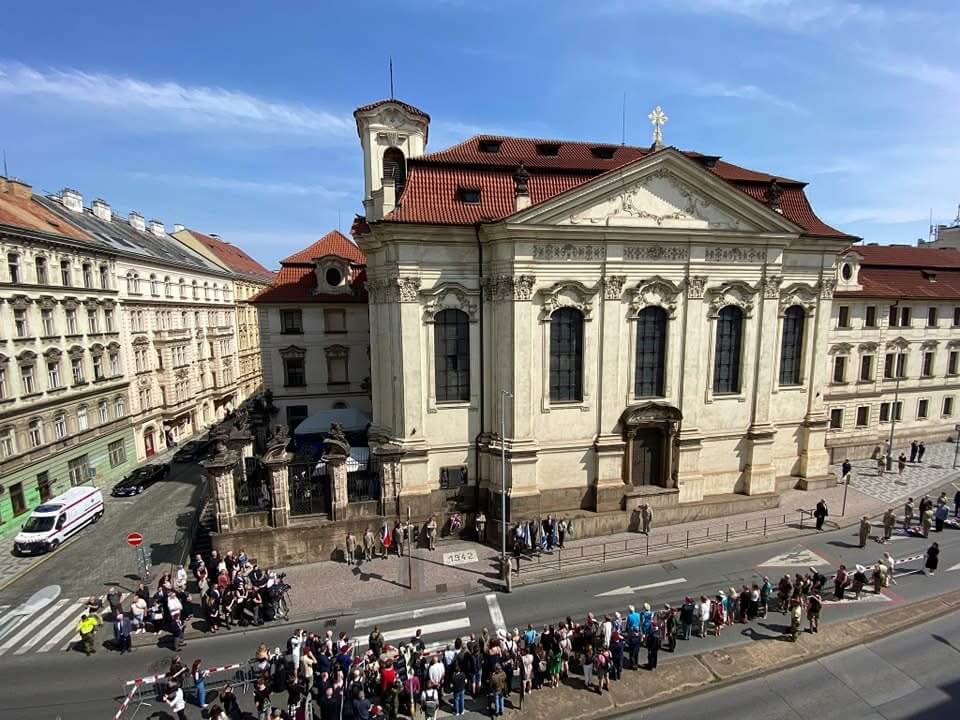
Two days after Čurda entered Gestapo headquarters, German forces surrounded the church.
Three Czechoslovak paratroopers — Adolf Opálka, Jan Kubiš and Josef Bublík — fought from the upper part of the building. Four others, Jozef Gabčík, Josef Valčík, Jan Hrubý and Jaroslav Švarc, remained below in the crypt.
And Čurda was brought there too.
The Germans hoped that somebody familiar might persuade the last four men to give themselves up. Aťa Moravec was brought to the church but refused to cooperate in that way. Čurda, on the other hand, called down to his former comrades and tried to persuade them to surrender.
They wanted nothing from him.
The battle continued for hours while the Germans used gunfire, grenades, tear gas and finally water in an attempt to drive the remaining paratroopers out of the crypt. None surrendered.
Afterwards, the bodies of the seven men were laid out for identification.
Karel Čurda helped the Gestapo identify his former comrades.
And this is where the explanation that everything happened during one terrible moment of fear begins to become very difficult to sustain. Fear can help us understand why he broke on 16 June.
It cannot explain everything he chose to do afterwards.
Did Čurda Save Nová Hlína?
There is, however, an uncomfortable part of this story which has survived in Čurda’s home region for decades.
Some people in Nová Hlína continued to defend him, or at least to explain his decision rather differently from the rest of the country. Their argument was simple enough: Čurda had seen what happened to Lidice and knew that if the Germans discovered a British-trained Czechoslovak paratrooper being hidden by his family, Nová Hlína might also have been destroyed.
Nobody can now know with certainty what the Germans would have done had Čurda been discovered there, and the fear itself was certainly real. Lidice had shown exactly what collective Nazi punishment could look like.
From that perspective, Čurda’s decision to leave his family and go to Prague might perhaps be understood as an attempt to remove the immediate danger from his mother, siblings and neighbours.
The problem is what he did when he got there.
He did not walk into the Petschek Palace, identify himself and ask the Germans to spare Nová Hlína.
He gave them other people.
Other families.
Other addresses.
The Moravecs were only part of what followed. Once the Gestapo began using Čurda’s information, the damage spread through a much wider Czechoslovak resistance network, including contacts associated with several parachute groups and the resistance organisation around Pardubice and Ležáky.
On 24 October 1942, 262 Czechoslovak patriots, resistance members and relatives connected with the paratroopers were murdered at Mauthausen concentration camp.
Perhaps Nová Hlína was spared.
But the price was paid somewhere else.
Karl Jerhot: A New Life in Prague
Had Karel Čurda disappeared from the story after Resslova Street, we could still argue endlessly about the psychology of one terrified man collapsing during the worst days of the Heydrich terror.
He did not disappear.
The Gestapo gradually built him a new life and turned him into an active collaborator.
Karel Čurda became Karl Jerhot.
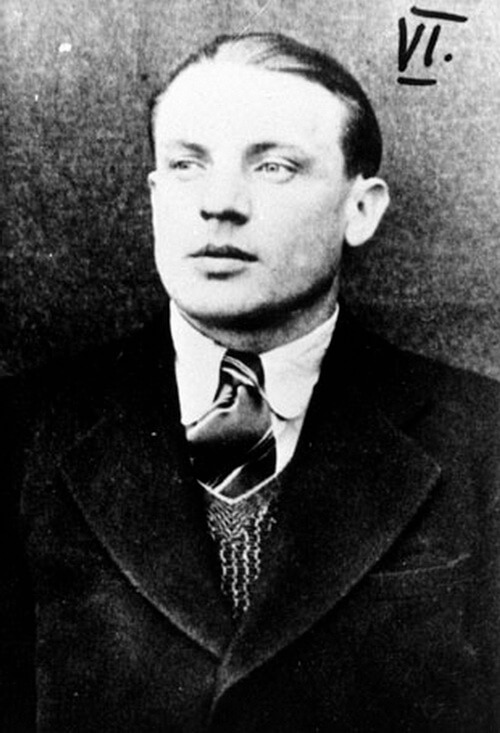
The Nazis allocated five million Protectorate crowns to him as a reward, although the famous sum was not simply handed over in a suitcase. According to Čurda’s later testimony, his bank book remained under the control of Gestapo official Heinz Diabo, who accompanied him when money was withdrawn.
For a while Čurda lived in accommodation in Libeň, and later the Gestapo moved him into a furnished apartment at Francouzská 8 in Vinohrady. He obtained German citizenship, lived under his new identity and gradually became part of the world of the men who had spent the summer of 1942 destroying the Czechoslovak resistance around him.
His personal life changed with it. The former Czechoslovak paratrooper eventually married a German woman, and Gestapo officials became part of his new social environment. He had an apartment, money, protection and a new identity, but none of this meant that the Germans simply allowed their valuable informer to retire.
They continued to use him.
One particularly revealing case involved František Pospíšil, Adolf Opálka’s cousin and a man Čurda knew from parachute training in Britain. Čurda approached him as an old comrade while Pospíšil was hiding in Brno and convinced him that he could help arrange a safer place in Prague.
Pospíšil had every reason to trust the man in front of him. They came from the same Czechoslovak military world and had trained for the same dangerous struggle against Nazi Germany.
Čurda was now working for the other side.
He helped bring Pospíšil towards Prague and later arranged another meeting in the Luxor passage on Wenceslas Square, supposedly involving somebody who could provide accommodation.
The Gestapo was waiting.
Pospíšil was arrested and later executed.
By that point there was very little left of the argument that Čurda was merely a frightened man who had made one terrible decision. He was now deliberately using relationships created inside the Czechoslovak resistance to help the Gestapo catch other members of it.
Five Million Crowns, Gestapo Friends and Alcohol
The Nazi reward became one of the most repeated parts of Čurda’s story, although even here reality was stranger than the legend.
Five million Protectorate crowns represented an enormous fortune, but the Gestapo continued controlling access to it. Čurda withdrew the money gradually rather than receiving everything at once, and according to his later estimate he ultimately used only around 1.1 million crowns.
His standard of living improved dramatically. He had his Prague apartment, German protection, money and contacts inside the Gestapo, while the Czechoslovak families who had hidden and supported the paratroopers were disappearing into prisons, execution grounds and concentration camps.
At the same time, alcohol increasingly dominated his life.
His drinking became heavier, and by the later years of the occupation even the Gestapo appears to have regarded him as progressively less reliable. The energetic Czechoslovak soldier who had trained in Britain only a few years earlier was disappearing behind Karl Jerhot.
And even the promised fortune eventually produced its own strange ending.
By the spring of 1945, most of the five million crowns remained untouched. According to Čurda’s later account, he and Heinz Diabo attempted to withdraw the remaining money as Nazi Germany collapsed. The sum was converted into German currency and Diabo took control of it, supposedly promising to deposit it safely for Čurda in Germany.
Čurda never recovered it.
The Gestapo had controlled his reward while he worked for them, and when their world finally collapsed, most of the fortune disappeared with it.
Then He Reported Himself
What happened after the war is perhaps the strangest part of Karel Čurda’s story.
Nazi Germany collapsed in May 1945. The Protectorate disappeared, the Gestapo fled and Karl Jerhot suddenly had every reason imaginable to vanish.
Instead, Čurda went to the Czechoslovak authorities.
He initially presented himself as a former Czechoslovak paratrooper who had survived the occupation.
Which was technically true.
It simply left out almost everything that mattered.
The authorities soon established who he was and what he had been doing since June 1942. He was arrested and eventually tried together with another former Czechoslovak paratrooper who had collaborated with the Gestapo, Viliam Gerik.
By then, the consequences of Čurda’s actions could no longer be measured only by the seven men who had died in Resslova Street. His information and later collaboration had helped the Gestapo penetrate a much wider Czechoslovak resistance environment, destroy families and pursue members of other parachute groups and underground organisations.
Karel Čurda was convicted of treason and sentenced to death.
On 29 April 1947, aged thirty-five, he was hanged in the courtyard of Pankrác Prison in Prague.

Somewhere Beneath Ďáblice Cemetery
After his execution, Čurda’s remains were taken to Ďáblice Cemetery, where he was buried without an individual marked grave within the cemetery’s system of common burial shafts.
There is something deeply uncomfortable about ending his story there, because Ďáblice contains layer upon layer of Czechoslovak twentieth-century history: victims of Nazi persecution, resistance figures, executed prisoners, later victims of communist repression and men who had themselves collaborated with oppressive regimes.
Somewhere there lies Karel Čurda.
It would be easy to finish his story by simply calling him a coward, but that would make everything almost too simple. Before his betrayal he had already done things that required courage: he had left an occupied country, joined the Czechoslovak Army abroad, trained for special operations and returned by parachute into occupied territory where capture could mean torture and death.
Then he broke.
That part can perhaps be understood.
What came afterwards is much harder to explain.
Čurda did not betray only Operation Anthropoid. He gave the Gestapo a way into the Czechoslovak resistance, helped lead investigators towards families who had risked everything for the paratroopers, returned to Resslova Street while his former comrades were fighting for their lives, helped identify their bodies and then spent the remaining years of the occupation working for the organisation that had hunted them.
The men in the crypt were frightened too.
So was Auntie Moravec.
So were the hundreds of people inside the Czechoslovak resistance who opened their doors, carried messages, hid radios, provided food, arranged accommodation or simply kept silent when speaking could have saved their own lives.
They knew what the Germans could do to them.
Their choices were different.
And somewhere beneath Ďáblice Cemetery lies Karel Čurda — a Czechoslovak paratrooper who returned home to fight Nazi Germany, betrayed the Czechoslovak resistance he had once belonged to, became a Gestapo collaborator and, after the war, walked back into the hands of the country whose uniform he had once worn.