
Lidice Shall Live: How the Rose Became a Symbol of Hope and Remembrance
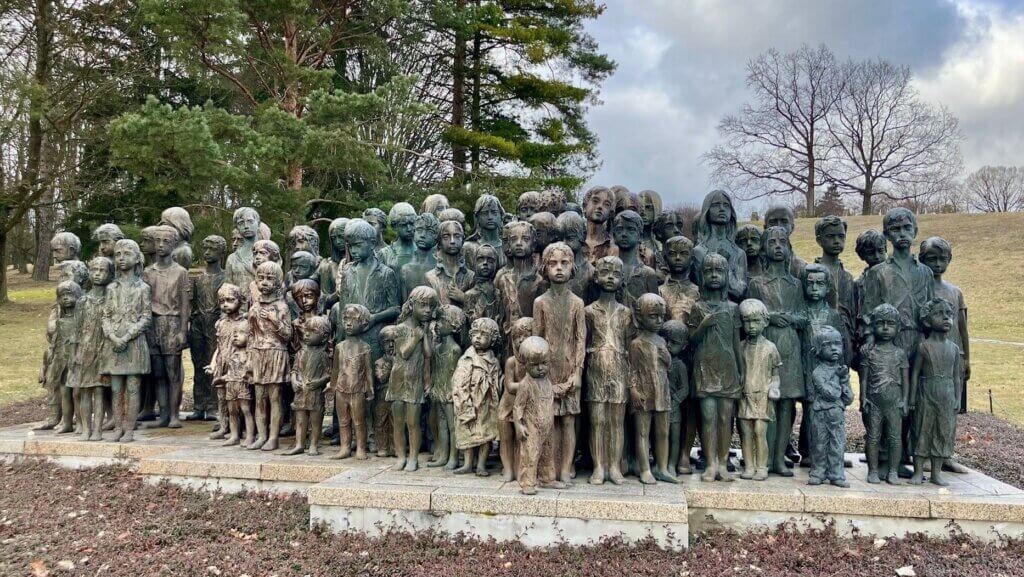
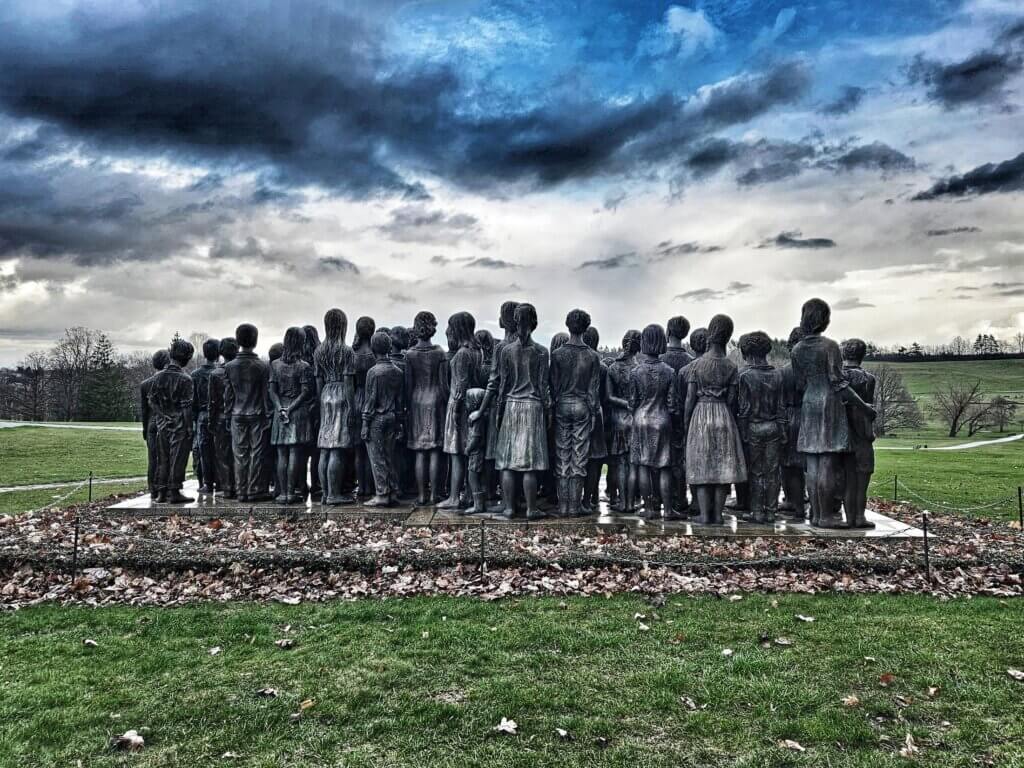
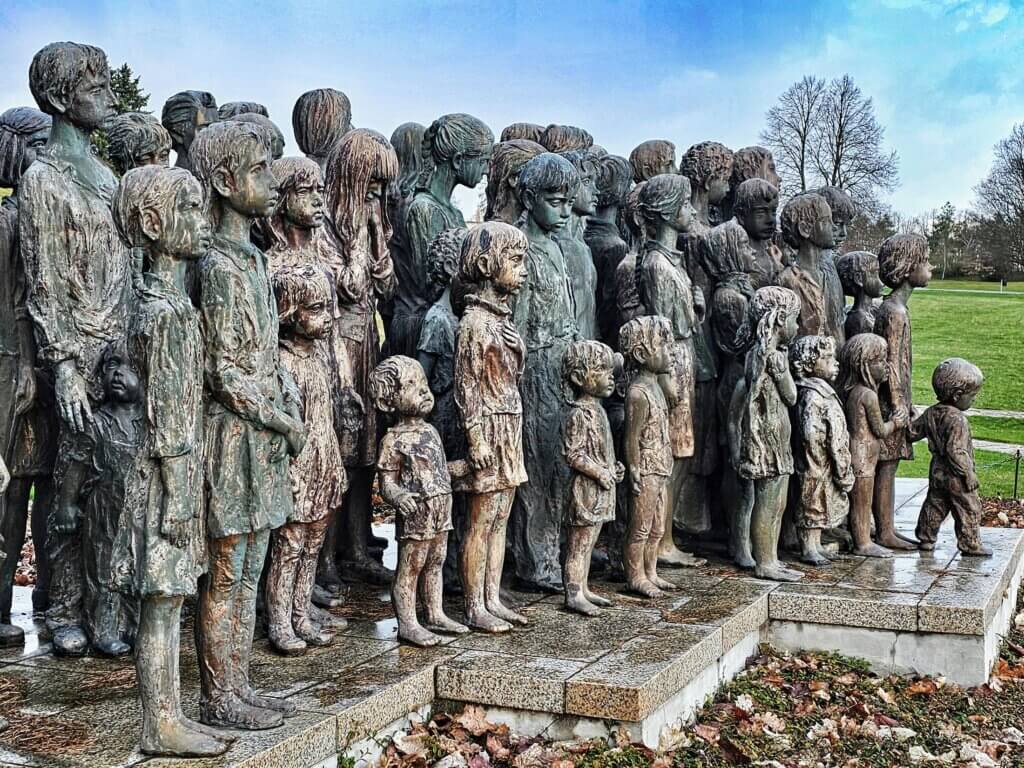
At the Lidice children’s memorial, you find yourself looking from one face to another. Small children stand beside older ones, their figures gathered closely together. There are 82 of them. Each represents a child whose life was taken by the Nazis.
Nearby, thousands of roses grow between the site of the destroyed village and New Lidice, where survivors began rebuilding their lives after the war.
The Lidice children’s memorial and Rose Garden were created decades apart. Their stories bring together a Czech sculptor, British miners, surviving Lidice women, gardeners and donors from across the world.
Behind both places is the determination to preserve the village’s memory. That determination found its voice in three words: Lidice Shall Live.
Who are the children remembered at Lidice?
On 10 June 1942, Nazi forces destroyed Lidice during the reprisals following the Operation Anthropoid attack on Reinhard Heydrich. Women and children were taken to Kladno, where the children were forcibly separated from their mothers.
Their subsequent fates differed. Some were selected for Germanisation; others were held separately because of their age or circumstances. Many were deported to Łódź in German-occupied Poland before being taken to their deaths.
The bronze ensemble commemorates 82 Lidice children murdered at Chełmno nad Nerem, where the Nazis used gas vans to kill victims. Its 42 girls and 40 boys also form a wider memorial to children killed in war.
The Czech name is Památník dětských obětí války—the Memorial to the Children Victims of War.
Marie Uchytilová: the woman behind the bronze children
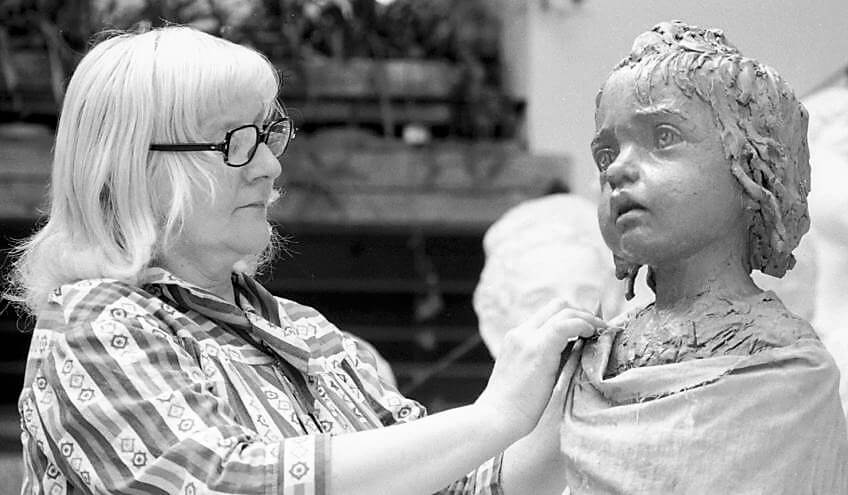
Marie Uchytilová was born on 17 January 1924 in Kralovice, north of Plzeň. She grew up in Plzeň and studied at Prague’s Academy of Fine Arts between 1945 and 1950, under sculptor and medallist Otakar Španiel.
She taught art and created sculptures, portraits and medals. Many Czechoslovaks carried one of her designs without knowing her name: the woman planting a linden branch on the familiar one-koruna coin.
The idea of commemorating children killed in war occupied her for years. In 1969, she chose the murdered children of Lidice as the subject through which to express it.
She researched their history, visited archives and spoke with Lidice mothers. With her husband, Jiří Václav Hampl, she established a studio large enough to accommodate the growing ensemble. Family accounts describe financial hardship, demanding working conditions and encouragement from survivors and visitors who believed the monument should be completed.
Her daughter, Sylvia Klánová, recalled how Uchytilová watched children from a nearby kindergarten, studying their movements and expressions. Such ordinary observations helped her create the gestures visitors notice in the figures today.
She never saw her completed masterpiece at Lidice
Uchytilová spent roughly twenty years modelling the children in figures slightly larger than life. By March 1989, the complete ensemble existed in plaster. She financed the first three bronze casts from her own savings.
On 16 November 1989, she died suddenly of a heart attack, aged 65—one day before the demonstrations that began the Velvet Revolution.
She never saw her completed memorial installed at Lidice.
Hampl continued the work, supported by her daughter, Lidice survivor Anna Nešporová and others. The first 30 bronze figures were installed in 1995. Further groups followed, with the final seven unveiled in 2000.
His contribution deserves recognition alongside hers. Hampl worked with Uchytilová during her lifetime and carried the project through its later stages. A final court ruling in 2016 recognised his co-authorship.
The finished memorial can seem inseparable from Lidice today. Yet its place here was never guaranteed. It took decades of work and persistence to bring the bronze children to this landscape.
Lidice Shall Live: a promise made during the war
The Rose Garden’s story begins with the international response to Lidice’s destruction.
In Stoke-on-Trent, doctor and councillor Barnett Stross worked with the North Staffordshire Miners’ Federation to establish the Lidice Shall Live campaign. Its public launch took place on 6 September 1942 at Victoria Hall in Hanley.
Miners donated part of their wages. The campaign raised £32,000 towards rebuilding Lidice, a substantial commitment from working communities living through wartime themselves.
The relationship continued after the war. In 1954, Stross and the movement proposed a rose garden connecting the original village site with New Lidice. British rose grower Harry Wheatcroft became involved in the project.
Which countries sent roses to Lidice?
Britain played a leading role. Coventry donated 1,000 roses, a contribution recorded in the city council’s account of its relationship with Lidice.
Other British contributors included Cardiff, West Ham, Wolverhampton, Derby, Barnsley and Stoke-on-Trent. In 1955, a delegation of Lidice women travelled to London to accept a British donation recorded as 5,769 bundles of rose bushes.
The Lidice Memorial’s detailed history names early international donors including East Germany, the Soviet Union, China, Korea, Luxembourg, Austria, Romania and Hungary. These are documented examples rather than a complete list of every contributing country.
The memorial’s broader account records 29,000 rose bushes donated from 32 countries.
Orchids, tulips and palm seeds: gifts beyond roses
The gifts were more varied than the garden’s name suggests.
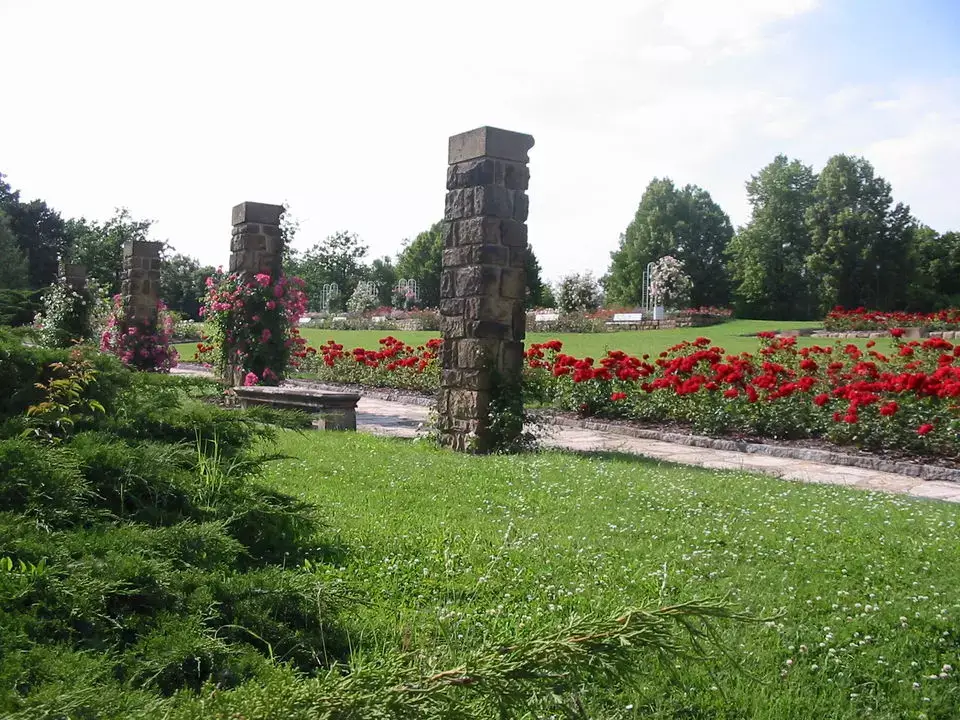
Oradour in France sent lilacs, the Netherlands sent tulips and Venezuela sent orchids. Gifts from Greece included olives, myrtles and laurels, while Cuba and Uruguay sent palm seeds, according to the Lidice Memorial’s historical account.
These details make the international response easier to picture. Communities sent plants from their own countries to a village many donors had never visited.
The gifts expressed something personal as well as political: people wanted to contribute something living to the future of Lidice.
How the Lidice Rose Garden was established
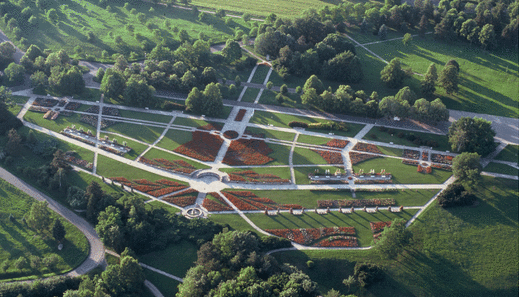
Architect František Marek worked with horticultural specialist Bohumil Kavka on the garden’s design.
Construction began on 14 March 1955. The sloping ground required terracing, irrigation and soil preparation. Plants had already begun arriving in February, but poor weather delayed the work. Roses were temporarily kept in pots in a nursery on a neighbouring field.
Volunteers, gardeners from Prague and the surrounding area, and Lidice women helped prepare the garden.
The Garden of Peace and Friendship—Sad míru a přátelství—opened on 19 June 1955, with approximately 17,000 rose plants across three hectares. Further donations enlarged the planting in the following year.
This explains why different historical accounts give different rose totals. The opening-day planting, accumulated donations and later garden are separate measures.
How many roses are in Lidice today?
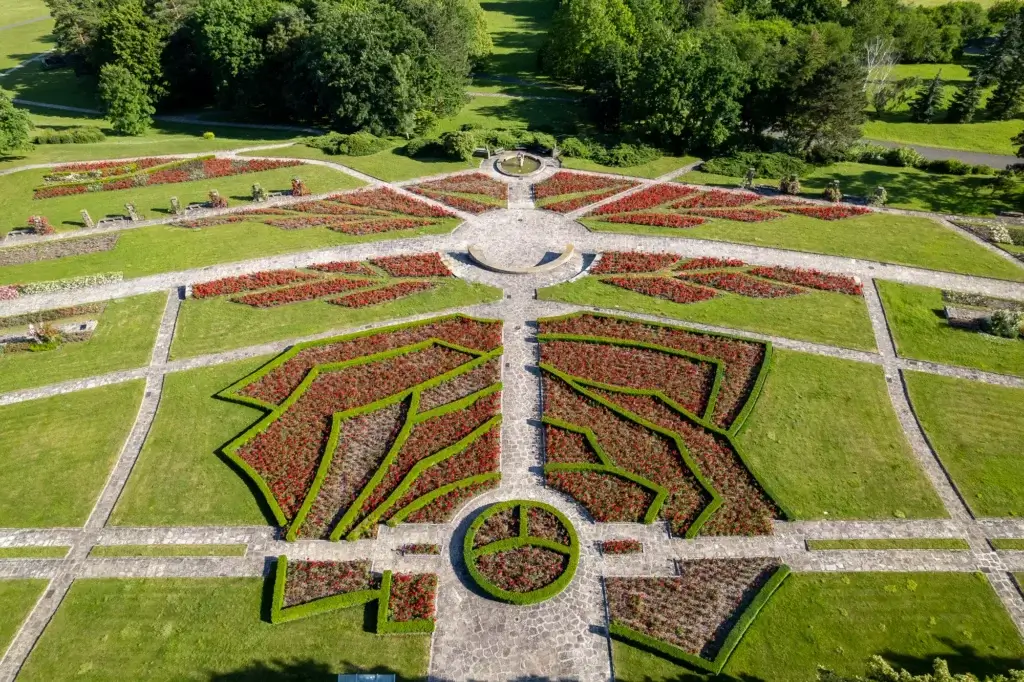
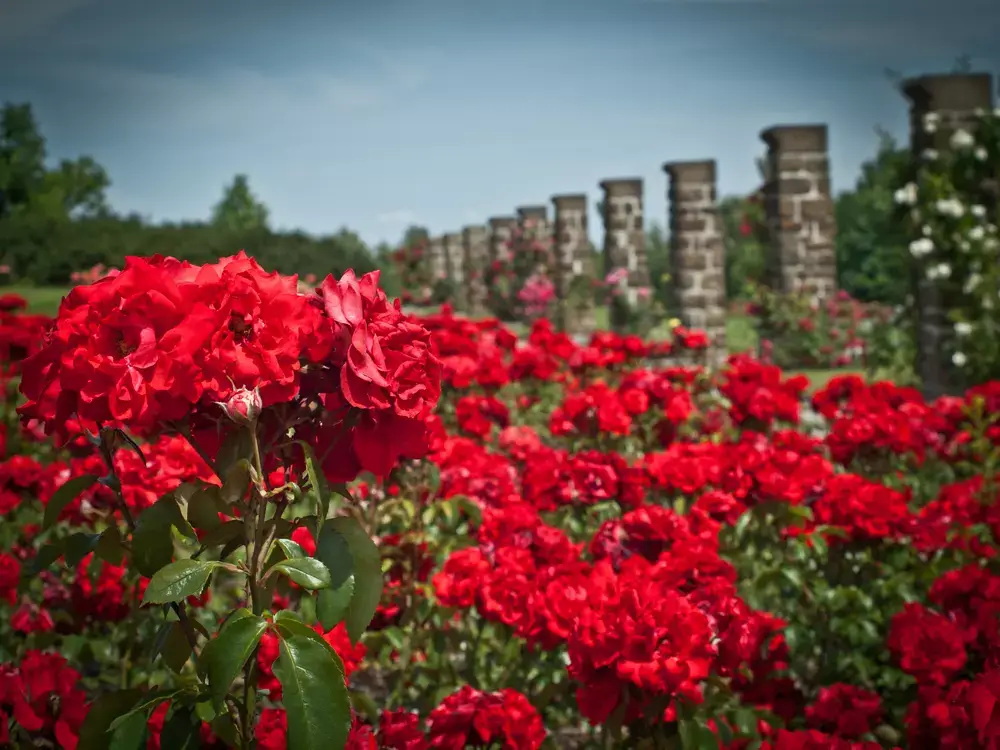
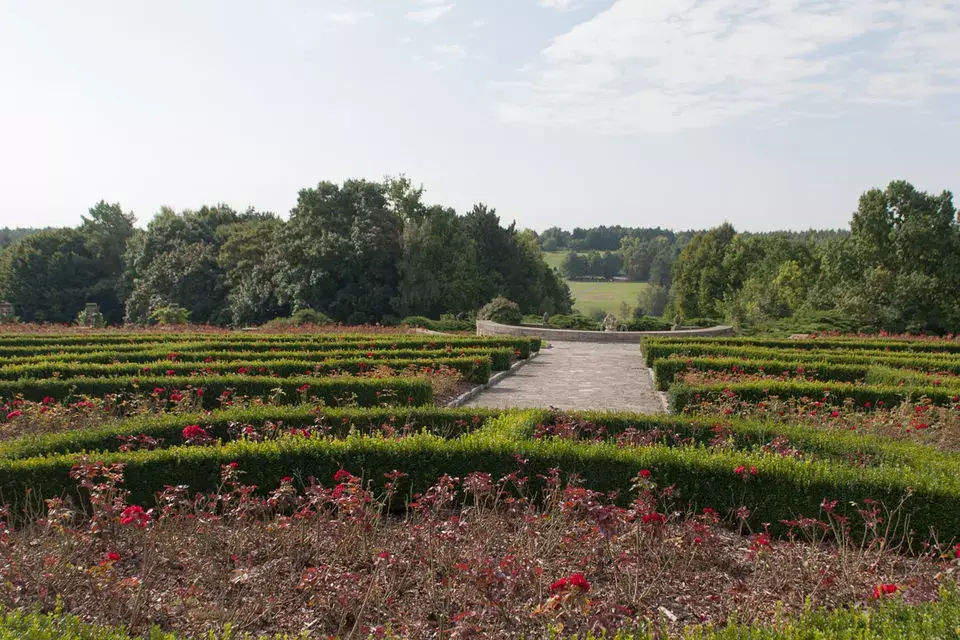
The Lidice Memorial currently lists more than 24,000 rose bushes in 240 varieties, covering approximately 3.5 hectares. Plants are regularly replaced and renewed, so this describes a maintained collection whose exact numbers can change.
From above, the planting forms three rose shapes representing Lidice’s men, women and children.
The design considers colour, flowering times, height and views across the slope. Its position between Old and New Lidice gives the garden a particular meaning: visitors walk between the place of destruction and the community built afterwards.
A garden that needed saving
The Rose Garden itself experienced years of decline. By the 1990s, its condition had deteriorated badly.
Restoration began in 2001, involving the Silva Tarouca Research Institute for Landscape and Ornamental Gardening, with Pavel Bulíř leading the landscape work.
In 2015, the garden received the Award of Garden Excellence from the World Federation of Rose Societies.
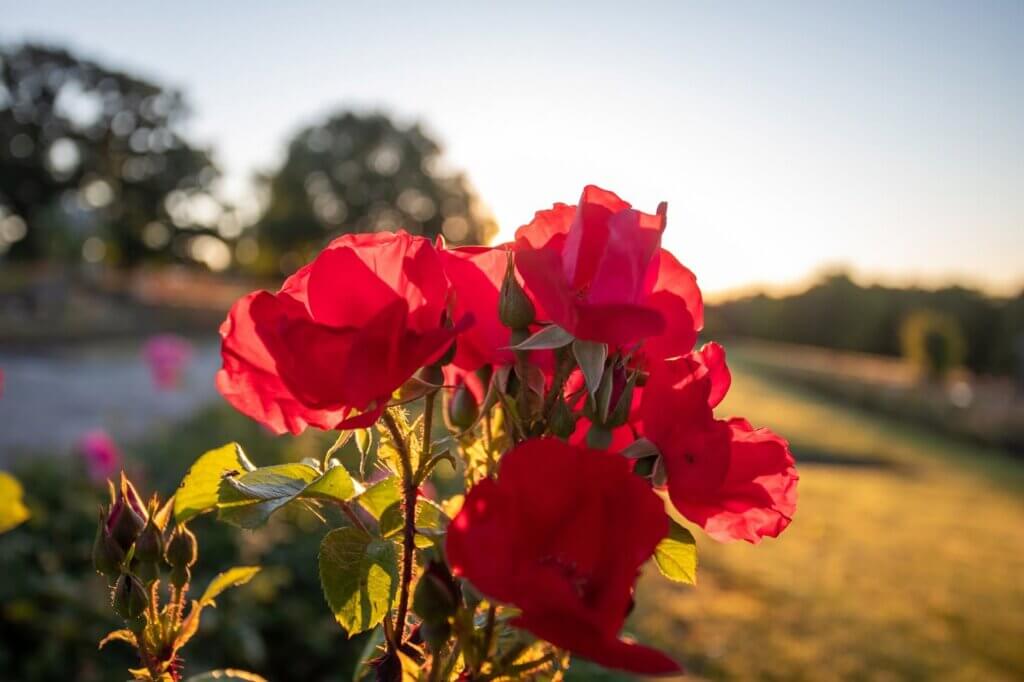
Its appearance changes with the seasons. June has a particular significance: the month of the village’s destruction is also a time when its roses flower.
Keeping this place alive requires continuing work. The original donations established the garden; generations of care have allowed it to remain.
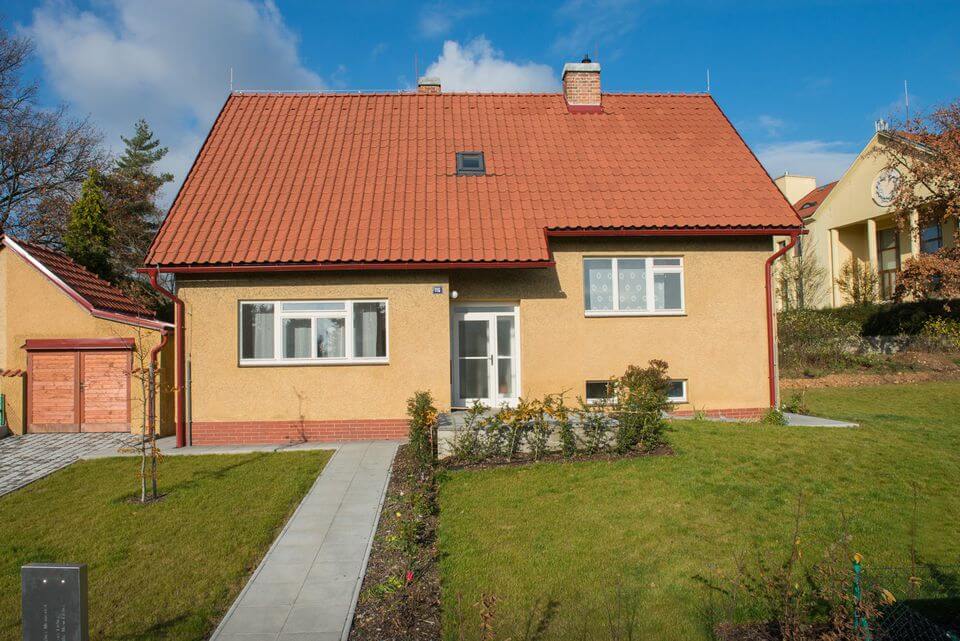
New Lidice and House No. 116: life after the destruction
The children’s memorial and Rose Garden lead naturally towards the story of New Lidice.
At the original village site, the museum and memorial grounds explain the destruction and commemorate its inhabitants. In the rebuilt village, attention turns towards survivors, new homes and the difficult return to everyday life.
We explored this chapter in one of our earliest blog articles, House No. 116 in New Lidice. Visiting the house brings the postwar story into a domestic setting, helping visitors think about what rebuilding meant beyond the construction of streets and buildings.
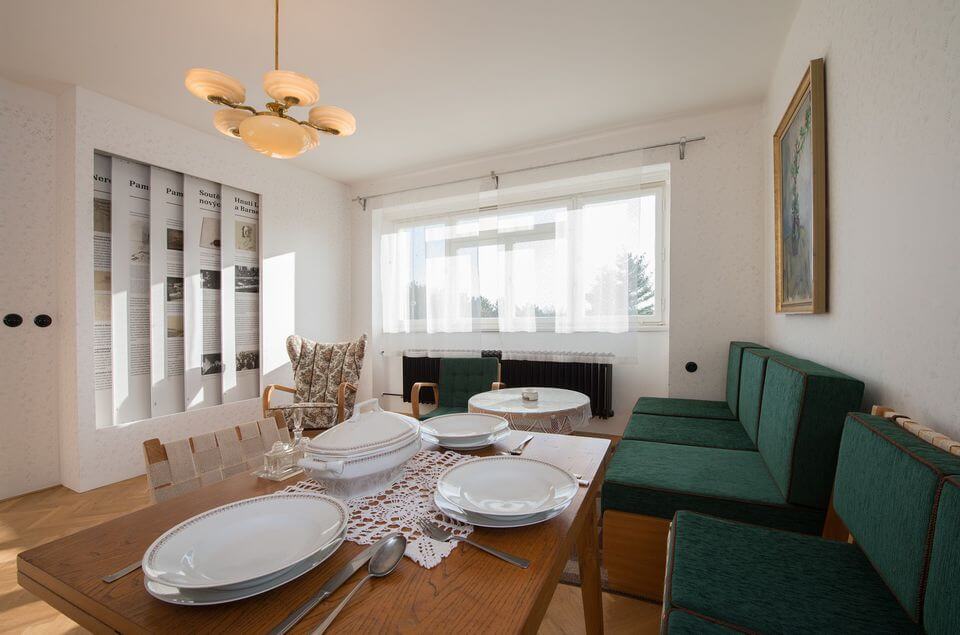
Giving time to both Old and New Lidice makes the experience more complete. The village’s history includes the loss, the survivors and the lives that continued afterwards.
Here, Lidice Shall Live becomes something tangible: a home, neighbours and a community carrying its history into the future.
Visiting the Lidice memorials from Prague
Our Lidice Memorial tour from Prague explores both Old and New Lidice, including the museum, memorial grounds, a stop outside the Lidice Gallery and a visit inside House No. 116.
For visitors interested in the wider connections, Anthropoid in Detail: Prague and Lidice combines Lidice with Prague’s Operation Anthropoid sites in an 8–9-hour guided experience. Walking and driving are balanced with a comfortable break for a traditional Czech lunch and a drink.
Read our full-day Prague and Lidice experience guide for the complete programme, or explore our regularly updated history blog for more stories behind the places we visit.
Whether you come independently or with a guide, allow time to understand how these memorials came into being. Remember Marie Uchytilová, who never saw her finished work here, and the survivors and supporters who contributed money, plants and years of effort.
Their work gave lasting form to a promise.
Lidice Shall Live.