
To understand Operation Anthropoid, it helps to look beyond the attack on Reinhard Heydrich. The story also belongs to the people who sheltered the paratroopers, the families who supported the resistance and the communities devastated by Nazi reprisals.
Our 8–9-hour Operation Anthropoid tour of Prague and Lidice connects these places in one day. It combines our four-hour Prague programme with our separate Lidice tour, with comfortable transport between locations, guided walks and a relaxed break for a traditional Czech lunch and a drink.
Both tours can be booked separately, each lasting approximately four hours. Combining them into one full-day experience is more reasonably priced than booking the two individually, and allows you to explore their shared history with the same guide.
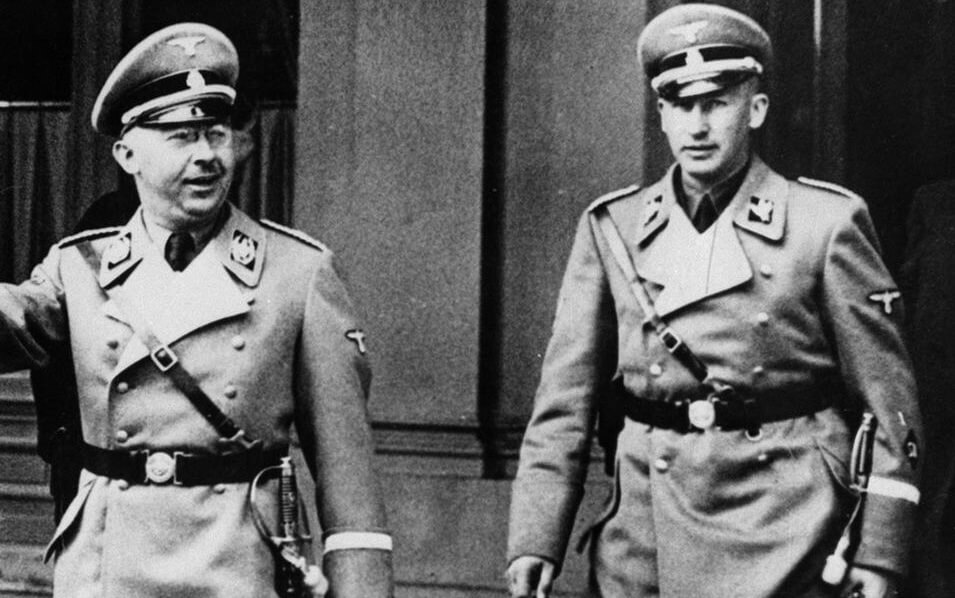
An experience for people who want to understand more
We developed Anthropoid in Detail: Prague and Lidice for travellers with a serious interest in WWII history, alongside those discovering the Czechoslovak resistance for the first time.
The day takes you beyond familiar landmarks to quieter corners of Prague, overlooked memorials and places that even many locals have never visited. Your guide explains the connections between them, with time for questions and room to follow your particular interests.
It is a personal experience shaped by local knowledge and years spent exploring these sites. Whether you are interested in the military operation, civilian resistance, the Orthodox helpers or the fate of Lidice’s families, there is space to look more closely.
Walking at the historic sites alternates with driving between locations, while lunch provides a proper sit-down break. The total duration of 8–9 hours includes transport, visits and lunch.
A flexible route with the complete programme
We may begin in Prague or travel to Lidice first. The order depends on traffic, road conditions and how busy the sites are that day.
Your guide arranges the route to make the best use of your time while keeping the day comfortable. All the visits described below form part of the programme, regardless of which area we explore first. Access to the cathedral’s interior is subject to church services.
Heydrich’s Curve: the attack and the escape
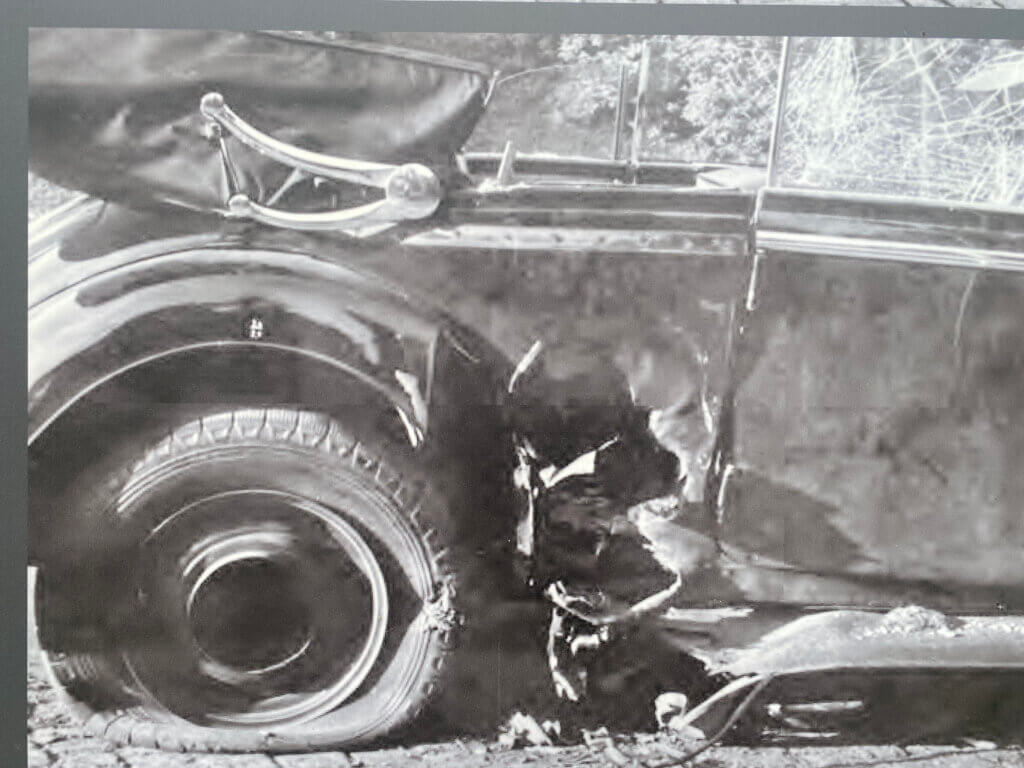
At Heydrich’s Curve, we examine the attack on Reinhard Heydrich on 27 May 1942 and the roles of Josef Gabčík and Jan Kubiš.
Being at the location helps explain why this stretch of road was chosen, how the attack unfolded and what happened as the men escaped. Your guide also helps you picture the wartime setting within a neighbourhood that has changed considerably since 1942.
From here, the story widens to include the civilians whose assistance was essential to the operation.

Jindřiška Nováková: a bicycle and an act of courage
The memorial to Jindřiška Nováková honours the teenage girl who collected Jan Kubiš’s bicycle after the attack.
Her story reveals how seemingly ordinary actions became part of the resistance. Moving a bicycle, carrying a message or opening a door could expose an entire family to danger.
We discuss her role and the consequences faced by those who helped the paratroopers. Our article about Jindřiška Nováková explores her story further.
Ďáblice Cemetery: a quieter chapter of Prague’s history
At Ďáblice Cemetery, we visit the mass-grave area and memorials associated with victims of Nazi persecution and communist repression.
This is a place to consider what happened to people after their deaths, how families struggled to trace their relatives and how victims are remembered today. Your guide explains the distinction between burial places and symbolic memorials, an important part of understanding the site.
Read more in our guide to Ďáblice Cemetery and its connection with Operation Anthropoid.
Kobylisy Shooting Range: connecting Prague with Lidice
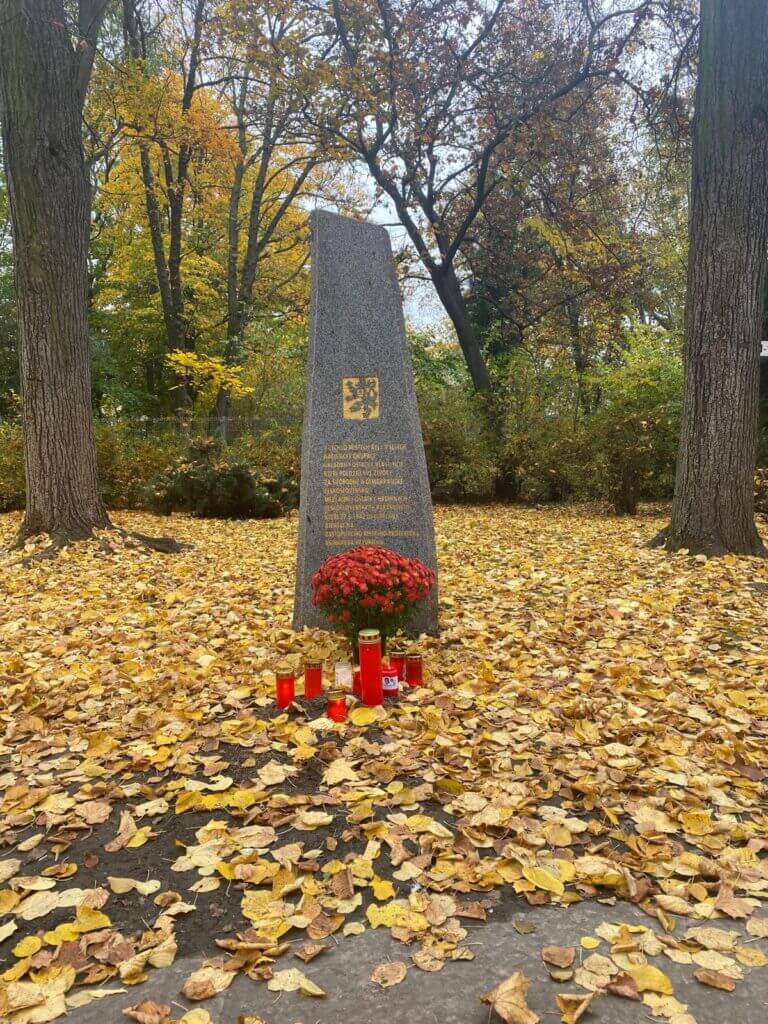
Hidden among residential buildings, Kobylisy Shooting Range is one of the most important places of remembrance on our route.
Resistance members, residents of Lidice and Orthodox church representatives who sheltered the paratroopers were executed here. Visiting Kobylisy alongside Lidice and the cathedral helps connect histories that are often presented separately.
We take time to look at the memorial plaques and discuss the people behind the names. The setting is quiet today, but understanding its history changes how you see this part of Prague.
Our Kobylisy Shooting Range article provides more background.

A traditional Czech lunch and time to rest
A full day exploring difficult history needs a comfortable pause.
The programme includes a traditional Czech lunch and a drink at a local restaurant. It is a chance to enjoy Czech cooking, rest your feet and talk with your guide before continuing.
Questions often lead to longer conversations over lunch, whether about the places already visited, your own family’s wartime experiences or another aspect of Czech history.
New Lidice: rebuilding a community
Our Lidice visit includes both the original village site and New Lidice, allowing us to explore what happened during the war and how life continued afterwards.

In the rebuilt village, we stop outside the Lidice Gallery before visiting House No. 116. Here, the focus turns towards the survivors, their return and the challenge of building new lives.
The house brings a domestic perspective to the visit. Alongside the history of destruction, there is the story of finding a home again and living with memories that could never simply be left behind.
You can discover more in our article about Lidice House No. 116.
Old Lidice: the museum and memorial grounds
At the Lidice Museum, we explore the destruction of the village in June 1942 and the fate of its residents.
Your guide explains how Lidice became a target of Nazi reprisals following the attack on Heydrich, despite the absence of an established connection between the villagers and the operation.

We then walk through the memorial grounds, including the site of the original village and the Memorial to the Children Victims of the War. Standing in this open landscape, we consider the homes, streets and everyday lives that once filled it.
There is time to walk, listen and reflect. Visiting Old and New Lidice together gives the surviving community a place in the story alongside the destruction.
For visitors who prefer a separate excursion, we also offer a standalone Lidice Memorial tour.
The memorial plaques near the cathedral
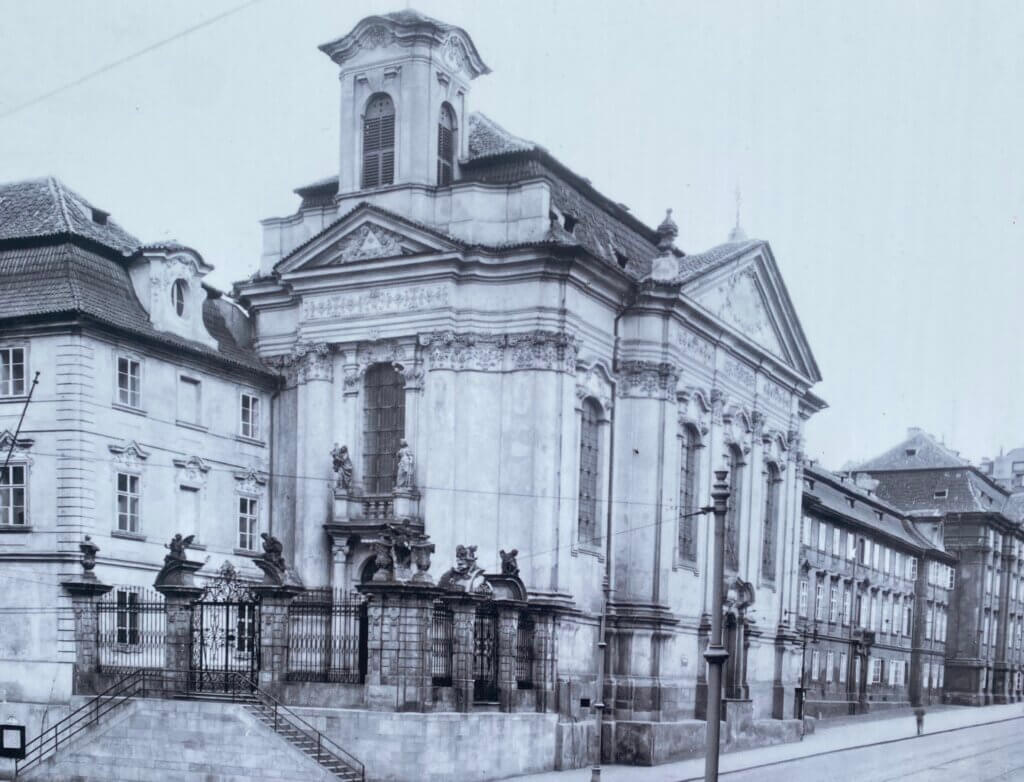
The final part of the programme brings us to the area around the Cathedral of Saints Cyril and Methodius on Resslova Street.
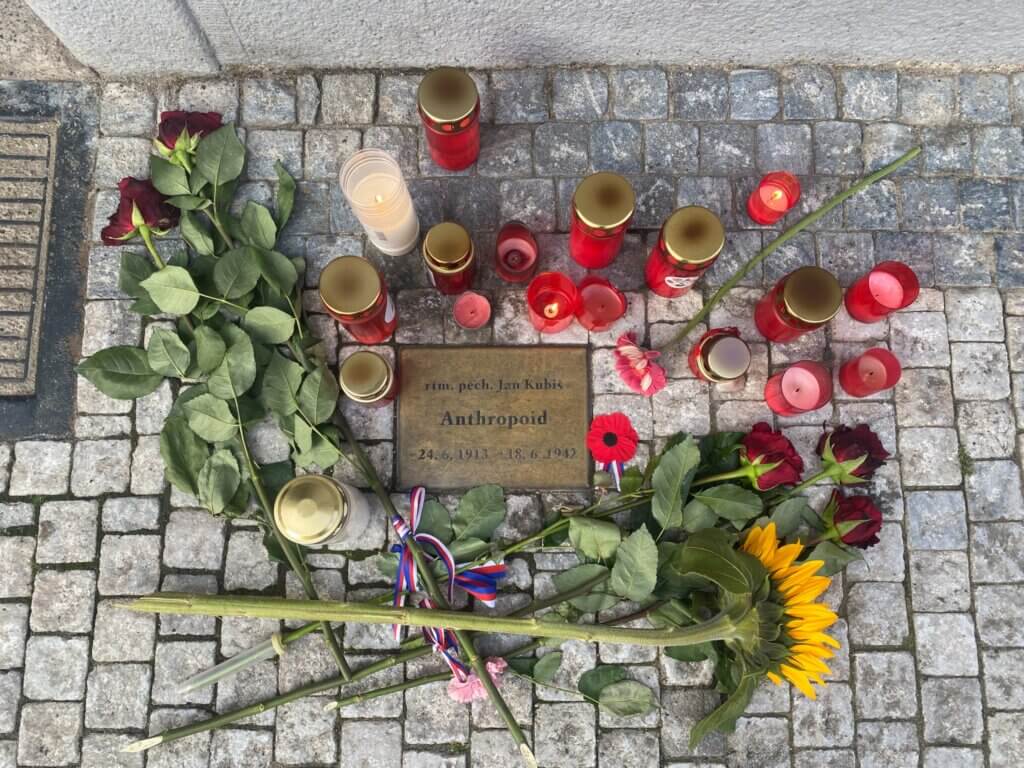
On nearby Václavská Street, we visit the pavement memorial plaques marking where the paratroopers’ bodies were laid out for identification after the final battle.
These individual memorials bring the seven men back into focus after a day exploring the wider resistance network and its consequences.
Remembering the supporters murdered at Mauthausen
Outside the cathedral, we also visit the memorial honouring resistance supporters murdered at Mauthausen concentration camp.
Their names show how far the consequences reached beyond the men in hiding. The paratroopers depended on people who provided homes, food, contacts and practical assistance, often placing their own families at risk.
Our Mauthausen article explores this part of the history in greater detail.
Inside the cathedral, exhibition and crypt
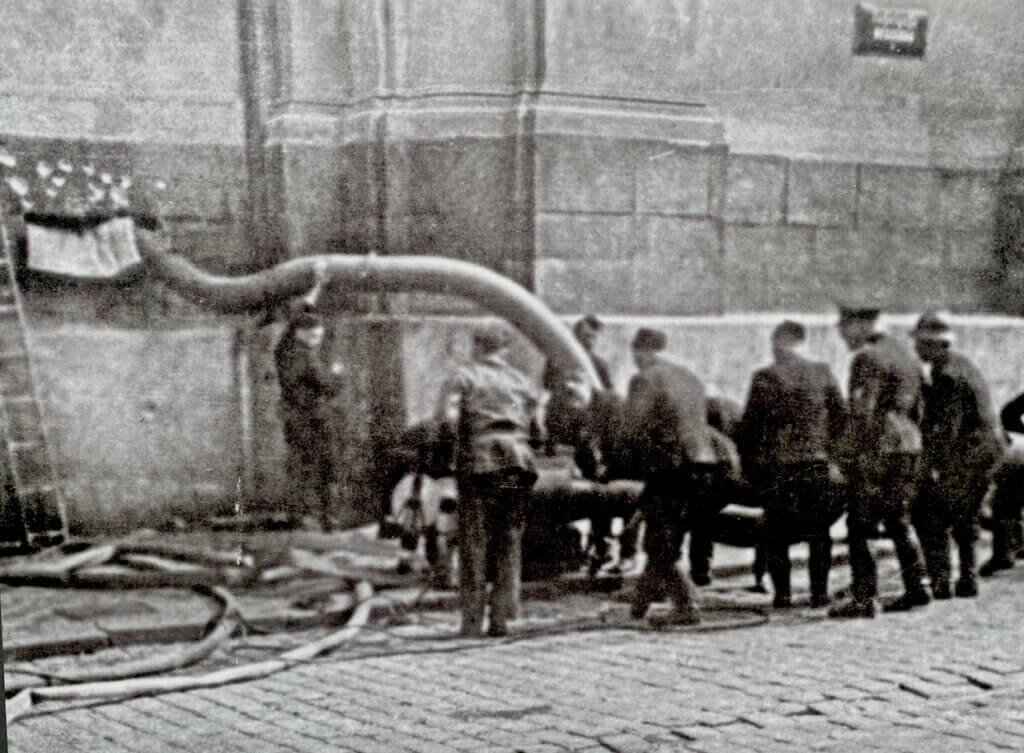
When services permit, we enter the Cathedral of Saints Cyril and Methodius, where your guide explains the fighting inside the church, including the upper gallery where three of the paratroopers resisted the Nazi attack.
We then visit the exhibition and crypt at the National Memorial to the Heroes of the Heydrich Terror.
Here, the day’s stories come together: the operation, the hiding place, the people who protected it and the final battle on 18 June 1942. Seeing the confined spaces helps explain the conditions in which the men hid and fought.
Each participant receives an English booklet and map to take away.
The tour ends after the exhibition and crypt visit. If you wish to stay in the neighbourhood afterwards, nearby U Parašutistů, the Paratroopers pub, is an option for a drink or meal at your own expense.
Private tours, small groups and meeting arrangements
Tours operate upon request, primarily as private experiences, with professional, licensed English-speaking guides who have a personal commitment to preserving and sharing this history.
When dates align, we may also bring together solo travellers or two small parties for a small-group departure. We discuss the arrangements with you when organising your booking.
Our usual meeting point is outside Clarion Hotel Prague Old Town on Hradební Street. Hotel pickup may be arranged depending on your hotel’s location and vehicle access. Your meeting or pickup arrangements are confirmed in advance.
The experience suits WWII enthusiasts, historians, students and curious travellers who want a deeper understanding of Prague and Lidice. Schools and larger groups are welcome to inquire about a programme and quote tailored to their needs.
Arrange your Operation Anthropoid and Lidice tour
If you would like to explore the connections between the Prague resistance sites and Lidice in one day, visit Anthropoid in Detail: Prague and Lidice for booking details.
Send us your preferred date, group size and particular interests, and we will help arrange your visit.
If you have less time, our four-hour Operation Anthropoid tour covers the Prague programme separately. You can also read what to expect from the four-hour tour before choosing.